
The Strategic Position of Rainbow Trout in Iran’s Aquaculture Industry
History of Coldwater Fish Farming in Iran
Coldwater fish farming in Iran began in the 1960s with the introduction and development of rainbow trout (Oncorhynchus mykiss). Between 1965 and 1967, the first eyed eggs of rainbow trout were imported from Denmark and bred at fish farming centers such as the Karaj Fish Company. Initially, the main goal was to breed and release fish into rivers and domestic reservoirs; however, gradually, fish production for human consumption also developed.
In 1966, with the establishment of the Jajrood Rainbow Trout Farm, rainbow trout production for the consumer market entered a new phase. During this period, efforts to produce broodstock and local spawning reduced dependence on the importation of eyed eggs and made it possible to supply fry to both public and private centers.
In the 1970s, other centers were established, including a farm in Fars Province that began operations in 1979. However, by the end of the 1970s, the development of trout farming remained limited, and the number of active centers and production levels were relatively low.
From 1979 to 1988, several coldwater fish breeding and farming centers were developed across various provinces in the country. During this period, centers like Kelardasht, Yasuj, and Dimeh were established or designed for rainbow trout fry production. Additionally, private farms in provinces such as Tehran, West Azerbaijan, Chaharmahal and Bakhtiari, Khorasan, Fars, Lorestan, and Mazandaran were developed. Despite this, a shortage of skilled personnel, high investment costs, dependence on imported eyed eggs and fish meal, and limited market demand slowed growth.
The years 1989 to 1990 can be considered a watershed period for the development of trout farming in Iran. With changes in fisheries policies and increased attention to aquaculture development, the private sector played a more significant role in fry production and farm development. The production of trout fry increased from approximately 4.5 million pieces in 1988 to about 38 million pieces in 1997. The transfer of technical knowledge to the private sector, the development of breeding centers, the availability of suitable water resources, and the increasing demand for fresh trout meat were important factors in this growth.
Subsequently, the farming of rainbow trout gradually transformed from a limited activity predominantly dependent on government centers to one of the important sectors of domestic aquaculture in Iran. In 1998, the production of farmed trout was reported to be around 500 tons, and by 2000, this amount had reached approximately 9,000 tons; a figure that indicates the rapid growth of the trout industry during this period.
High physiological adaptability, ideal growth rates, and market acceptance have provided the rainbow trout species with a unique commercial position compared to other farmed species. However, the transition from traditional farming to intensive and modern aquaculture requires a fundamental re-evaluation of farm management, environmental parameters, and especially engineered nutrition. Today, achieving the maximum genetic potential of the stock is impossible without the use of extruded rainbow trout feed and managing the feed conversion ratio (FCR).
This guide has been developed as a comprehensive and technical reference, based on scientific findings and industrial experience, to assist farmers in accurately understanding the physicochemical conditions of water, modern aquaculture systems, feed formulation and physics management, as well as profitability strategies in domestic and export markets.
Biology, Physiology, and Ecological Needs of Rainbow Trout (Oncorhynchus mykiss)
The rainbow trout species (Oncorhynchus mykiss) resembles the Pacific salmon genus belonging to the family Salmonidae. Blue trout is native to areas surrounding the North Pacific Ocean from Northern California to Alaska and regions in the western Pacific from the Kamchatka Peninsula and the Okhotsk Sea. This fish is typically adapted to freshwater but does have anadromous populations found in the northwest and northeast Pacific waters. These populations have a life cycle similar to Pacific salmon, spending part of their lives in the ocean but returning to lakes and rivers for spawning and the larval to fry stages. Many rainbow trout can adapt to saltwater life before reaching the pre-juvenile 75 to 100-gram stage. This adaptation occurs through gradually increasing the salinity of their rearing environment. This issue has made rainbow trout a commercially important species.
Rainbow trout have been farmed for hundreds of years and are among the most important farmed fish widely distributed globally. Rainbow trout can tolerate a wide range of water temperatures and environmental variables, including water quality; however, this fish requires a high level of dissolved oxygen. The suitable temperature for farming this fish is 13-18 degrees Celsius. This fish holds high value as human food, having either pink or white meat depending on the type of diet.
In North America, Britain, Denmark, France, and Italy, this fish is mainly farmed in freshwater using water-saving storage systems. In Scandinavian countries, rainbow trout after the initial life cycle in freshwater are farmed in sea cages.
Formulating feeds for rainbow trout farmed in sea cages differs from those raised in freshwater. The global production of rainbow trout in 1995 was recorded at 35,8456 tons, making it the second-leading fish production after Atlantic salmon. Denmark and Italy accounted for 48% of the global production of rainbow trout in 1995.
A precise understanding of the anatomical and physiological characteristics of this species—including a short digestive tract, high protein requirements, a gas-exchange-sensitive respiratory system, and a cold-blooded structure—forms the foundation for any management and feeding program in farms. The metabolic rate of this fish is directly linked to the ecological conditions of the surrounding environment; meaning that respiratory rates, digestive enzyme secretion, nutrient utilization efficiency in rainbow trout feed, and growth potential are all functions of the chemical and physical status of the pond water.
Physicochemical Parameters of Water (Temperature, Dissolved Oxygen, pH, and Salinity)
Continuous monitoring and control of physicochemical indicators of water are essential for maintaining fish body homeostasis and preventing growth efficiency disruption:
Temperature and its Effects on Metabolism: The optimal growth temperature for rainbow trout is defined between 13 to 16 degrees Celsius. In this range, the activity of proteolytic enzymes in the digestive tract is at its highest rate, and minimal energy loss occurs. With an increase in temperature, the rate of respiration and basal metabolism of the fish significantly increases; this can lead to reduced appetite, indigestion, and decreased daily growth rates when gas solubility declines. At temperatures above 20 to 22 degrees Celsius, the risk of mortality and acute physiological disturbances is very high.
Dissolved Oxygen: Trout is a species highly dependent on high oxygen levels. The optimal dissolved oxygen level for maximum growth rates and ideal feed conversion ratios is over 6 to 8 milligrams per liter (DO>6 mg/L) in the output of ponds. A drop in oxygen to below 4 milligrams per liter is a serious warning that halts digestive metabolism and causes the fish to enter an anaerobic biochemical phase producing lactic acid. Concentrations below 3 milligrams per liter are considered a critical threshold for mortality.
Acidity (pH): The optimal pH range for this species is between 6.5 to 8.
Stress Factors and Biosecurity in Ponds
At high farming densities, stress factors exponentially negatively impact the physiology of salmon:
Non-toxic ammonia (NH4+) vs. toxic free and soluble ammonia (NH3): Ammonia excreted from the fish gills and resulting from the breakdown of waste exists in two balanced forms in water: ionized and non-toxic, and non-ionized and highly toxic. The ratio of these two gases directly relates to the temperature and pH of the water; as pH and temperature increase, the toxic proportion spikes. Higher values cause gill hyperplasia, tissue suffocation, and severe weakening of the fish’s mucosal immune system.
Dissolved Carbon Dioxide (CO2): Accumulation of carbon dioxide due to high density and insufficient ventilation leads to a phenomenon called acidosis and hypercapnia. The direct effect of this phenomenon is a decrease in hemoglobin capacity to bind with oxygen and an increase in the formation of kidney stones (nephrocalcinosis) in trout.
Careful management of these factors creates a healthy environment for optimal nutrient utilization by fish, especially in intensive aquaculture systems.
Modern Rainbow Trout Farming Systems and Infrastructure in Iran
Sustainable aquaculture development on the Iranian plateau is directly dependent on selecting a farming system suited to the water source flow, topographic slope, and regional climate. Today, the diversity of aquaculture systems, from traditional concrete ponds to high-tech recirculating technologies, presents various horizons for rainbow trout producers in Iran. The choice of each system, in addition to initial investment, determines aeration patterns, storage densities, and even the physical characteristics of rainbow trout feed in terms of sinking rate and water stability.
Traditional Concrete Ponds (Raceway) and Flow Channels
Rectangular concrete ponds or raceways are the most common farming pattern along Iran’s rivers and springs. These systems are designed based on unidirectional gravitational flow, where fresh water enters from one side and is discharged containing solid waste from the other side.
- Advantages: Ease of construction, straightforward harvesting management, visual control of the stock, and ease of washing.
- Challenges: The longitudinal gradient of oxygen and water quality—that is, as water flows toward the end of the channel, the dissolved oxygen decreases, and the ammonia and carbon dioxide concentrations increase. Therefore, the installation of intermediate aeration systems (such as splash or forced) and the use of extruded feeds with fine particles (fines) close to zero is essential to prevent the decline of water quality downstream from the pond.
Floating Cages in Reservoir Dams and Lakes (Oxygen Capacities and Challenges)
Farming in floating cages (Cage Aquaculture) in non-potable reservoir lakes and water bodies allows for cheaper production without the need to own large coastal lands.
- Strengths: Reduced water pumping costs, utilization of unlimited natural water volume, and improved fish fillet quality due to continuous buoyancy in flowing water.
- Oxygen Challenges and Thermal Stratification: In warmer seasons, the phenomenon of thermal stratification hinders the mixing of water layers and leads to severe oxygen depletion in the deeper layers of the cage. Moreover, in cage farms, the waste of heavy and traditional feeds is high; thus, using extruded pellets with engineered apparent density and controlled buoyancy (slow-sinking) is necessary to reduce feed loss in inaccessible depths.
Recirculating Aquaculture Systems (RAS); A Solution to Water Scarcity and Biosecurity
Recirculating Aquaculture Systems (RAS) are a technological response to the drought crisis and declining groundwater reserves in Iran. In these systems, over 90 to 98 percent of water is recirculated after passing through mechanical filtration (drum filter), nitrification biofilters, degassing towers, ultraviolet sterilization (UV), and pure oxygen injection systems.
Maximal biosecurity: Complete separation of the farming environment from pathogens transferred by surface waters.
Critical prerequisite: These systems require highly digestible feeds with very high physical stability; since any early disintegration of the pellets disrupts the organic load of biofilters and undermines nitrification.
Trout Farming Hubs in Iran
The geography of trout production in Iran is based on mountainous belts:
- Chaharmahal and Bakhtiari Province: The capital of coldwater fish in the country due to its springs and headwaters of the Karun and Zayandeh Rud rivers, with an extraordinary climate for fattening production periods.
- Lorestan Province: Benefiting from a high flow rate of natural springs and turbulent rivers in the Sazari and Kashkan basins.
- Mazandaran Province: A pioneer in dual-purpose aquaculture, farming in rice paddies and cages in the Caspian Sea.
- Koohgiluyeh and Boyer-Ahmad Province: An emerging hub utilizing the rich runoff resources of Dena.
The focus of these hubs on increasing productivity underscores the need for regional feed formulation and a supply chain for quality industrial feed.
Nutritional Management and Feed Formulation for Rainbow Trout
In the industrial rearing of rainbow trout in Iran, nutrition is not just about supplying energy and nutrients; it is also the most critical tool for controlling growth, gut health, carcass quality, production efficiency, and ultimately farm profitability. In most farms, feed accounts for between 55 to 70 percent of the total cost of trout; therefore, any incorrect decisions in the selection of rainbow trout feed, feeding programs, or physical feed quality directly influence feed conversion rates, water quality, and mortality. Thus, nutritional management in modern aquaculture is a data-driven and engineered process that must be designed based on the fish’s physiological needs, growth stage, environmental conditions, and feed production technology.
Nutritional Requirements of Trout Based on Growth Stages
Trout is a carnivorous fish with relatively high protein requirements and limited capacity for using complex carbohydrates. The relatively high and limited capacity for using complex carbohydrates changes with relative growth rates, digestive capacity, and metabolic priorities. In early stages such as fry and fingerlings, rapid tissue growth, immune system development, and organ formation result in a higher requirement for proteins and essential amino acids. At this stage, the feed must be closely controlled regarding particle size, uniformity, digestibility, and palatability.
Overall, in starter and pre-fattening feeds, the crude protein (CP) level is typically higher, ranging from about 47 to 56 percent, while in growth and fattening stages, it can be adjusted to about 40 to 47 percent depending on the fish’s weight and farming conditions. Crude fat also plays an important role as a concentrated energy source, reducing protein consumption for energy and preserving it for muscle growth; however, this level must be managed carefully because uncontrolled increases in fat can negatively affect carcass quality, visceral fat accumulation, and even the oxidative stability of the feed. In practice, the fat level in trout diets typically ranges from 9 to 18 percent depending on the growth stage and production strategy.
Regarding carbohydrates, trout has a more limited capacity than warm-water species for consuming starchy resources; however, if starch is well gelatinized during production, it can act both as a digestible energy source and as a binding agent in the feed structure. The energy-to-protein ratio should be adjusted to maximize growth while minimizing nitrogen loading in the water. For this reason, professional formulation of trout feeds is not based solely on the percentage of crude nutrients, but must be designed based on digestible protein, metabolizable energy, amino acid balance, essential fatty acids, available phosphorus, and real digestibility of raw materials.
Extrusion Technology and the Benefits of Extruded Feed Over Traditional Pellets
In recent years, the difference between standard feed and truly functional feed has become more apparent, primarily due to the manufacturing technology used. Extruded feed for trout is not just a processed feed; it is an engineered product whose nutritional and physical characteristics are simultaneously optimized for farm performance. In the extrusion process, raw materials are subjected to moisture, pressure, temperature, and mechanical shear. The result of this process is increased gelatinization of starch, improved structural cohesion of pellets, enhanced digestibility, and the production of particles with controllable density and buoyancy behavior.
One of the most significant advantages of extruded feed is water stability. In the farm, the quicker the feed disintegrates, the higher the loss of nutrients, especially nitrogen and fat, leading to declining water quality. This is particularly critical in intensive ponds and recirculating systems. Feed with adequate stability provides sufficient opportunity for complete consumption by the fish while simultaneously reducing suspended particle levels and organic load entering the system.
Another important indicator is the physical durability of the pellet or PDI (Pellet Durability Index). When PDI is low, during transportation, storage, and even feeding, the percentage of fines increases. These fines are either not consumed by the fish or quickly lead to an increase in solid particulate matter, microbial growth, and fluctuations in water quality. Extruded feed with suitable PDI enhances consumption uniformity and feeding precision.
Another significant advantage is the ability to coat fats post-cooking using Vacuum Coating technology. In this method, oil penetrates into the porous structure of the feed instead of merely sitting on its surface. This characteristic has several important implications: first, it allows for the increase of feed energy without compromising physical structure; second, it reduces fat leakage into the water; and third, it provides better uniformity in the distribution of oils and sensitive additives. For trout, which requires high-energy, highly digestible diets, this technology presents a real competitive advantage.
In practice, a farmer using standard extruded feed typically experiences improved growth, reduced FCR, less nutrient loss in the water, decreased mortality, and better management of feeding behavior. This is precisely where the quality of feed production can translate into a tangible economic advantage for the farm.
Ration Management, Feeding Rates, and Feed Conversion Ratio Index
Even the best feed will not yield optimal returns if consumed under a faulty program. Ration management in the farming of rainbow trout in Iran should be based on the average weight of fish, total biomass, water temperature, dissolved oxygen status, stock health, and production goals. The feeding rate is usually expressed as a percentage of biomass per day and decreases as the fish weight increases. For instance, fingerlings, due to their higher relative growth rates, require a larger percentage of their body weight in feed, while this percentage decreases in larger fish.
The basic formula for calculating the daily feed amount is as follows:

If a farm has 10 tons of active biomass and the feeding rate is determined based on temperature and fish weight at 1.5 percent, the daily feed amount will equal:

This number should, of course, be adjusted based on dietary behavior, seasonal conditions, and water quality. At lower temperatures, the speed of food passage through the digestive system decreases, while at higher temperatures, appetite decreases due to reduced oxygen levels and increased metabolic stress. Therefore, successful feeding is not merely a mathematical calculation; it is a combination of data, experience, and real-time monitoring of the farm.
On the other hand, the feed conversion ratio (FCR) is one of the most important economic performance indicators and is calculated from the following relationship:
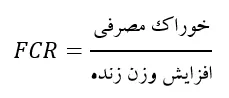
The lower the FCR, the more weight fish produce with less food intake, indicating higher economic efficiency. For instance, the difference between an FCR of 1.1 and 4.1 in an industrial farm can have a significant effect on the final cost of each kilogram of fish. FCR is not solely a function of feed quality; it is also influenced by water quality, density, uniformity of the stock, feeding management, fry quality, and even the amount of feed fines. For this reason, a professional producer must simultaneously pay attention to formulation, physical feed quality, and the accuracy of the feeding program.
Functional Additives and Gut Health
In modern aquaculture nutrition, the goal is not just to meet basic needs; it is also to enhance digestive performance, immunity, and the quality of the final product through functional additives. Prebiotics assist in improving gut health and nutrient absorption by stimulating the growth of beneficial gut microbiota. Probiotics can also enhance gut flora balance, resistance to pathogens, and even digestive efficiency. Additionally, compounds such as organic acids, plant extracts, immunostimulants, and supplementary enzymes can stabilize flock performance under stress conditions, seasonal changes, or disease pressure.
Antioxidants are particularly important in trout feed because fatty diets rich in unsaturated fatty acids are more sensitive to oxidation. Controlling oxidation not only prevents a decrease in the nutritional value of the feed but also affects the quality and shelf life of the final product.
In farms where the market target is to produce fish with desirable pink or red flesh, the use of pigments such as astaxanthin and canthaxanthin plays a direct role in the coloration of trout flesh. However, success in pigmentation is not solely dependent on the addition of pigments; it also relies on the duration of consumption, the fat content of the diet, liver health, intestinal absorption, and uniformity of feeding. Therefore, the formulation of coloring feed should be scientific, stepwise, and aligned with the timing of market delivery.
Ultimately, professional feed for trout should not just be “filler”; it should have a specific purpose. This highlights the importance of producing industrial feed with a formulation that ensures water and profitability. It also clarifies the significance of producing industrial feed with a precise formulation, continuous quality control, high physical stability, and adaptability to Iranian farm conditions; a topic that can be a true and demonstrable brand advantage for companies like Sedad Daneh Novin.
Health, Biosecurity Management, and Control of Common Diseases in Trout Farms
Maintaining herd health and applying biosecurity principles are the primary prerequisites for productivity in intensive aquaculture. With increased stocking density, the line between profitability and crisis becomes very thin; therefore, prevention is always less costly and more efficient than high-risk pharmaceutical treatments in rainbow trout farms in Iran.
Key Viral Diseases (VHS, IPN, and IHN) and Prevention Strategies
Viral infections are the largest structural threat to cold-water farms:
· Viral Hemorrhagic Septicemia (VHS): Associated with symptoms such as exophthalmos (protruding eyes), skin darkening, bleeding in fins, and visceral tissue.
· Infectious Hematopoietic Necrosis (IHN): Causes heavy mortality in fry due to kidney and spleen tissue destruction.
· Infectious Pancreatic Necrosis (IPN): Results in spiralling swim and high mortality during early incubation and larval stages.
Due to the absence of definitive antiviral treatments, the fundamental strategy includes providing pathogen-free eyed eggs, entry quarantine, regular disinfection of tanks, and preventing the entry of wild birds and vectors into the system.
Bacterial, Fungal, and Parasitic Challenges
Bacterial diseases such as streptococcosis/lactococcosis cause severe damage during the warm seasons (temperatures above 15 degrees Celsius) with symptoms such as eye lesions and meningitis. In contrast, yersiniosis (red mouth disease) occurs under stress and poor water quality conditions. The common fungal infection Saprolegnia usually affects skin and fins following mechanical injuries during grading. Continuous monitoring of gill parasites such as Trichodina and Ichtiohphthirius is essential to prevent tissue suffocation.
The Role of Immunity-Boosting Nutrition in Preventing and Reducing Flock Mortality
Nutrition is the first line of defense for fish against pathogens. Feeding standard rainbow trout feed enriched with components such as beta-glucans, nucleotides, prebiotics, and stabilized vitamins C and E stimulates the non-specific immune system and strengthens the mucosal barrier of the skin and gut, ensuring the biological resilience of the flock against environmental shocks and opportunistic pathogens.
Market Analysis, Economics of Aquaculture, and Export Opportunities for Trout from Iran
The cold-water aquaculture industry in Iran has recently transformed from a purely local market reliant on whole fish supply to a trade and export-oriented value chain. Sustainable foreign currency generation in the field of rainbow trout in Iran requires enhancing post-harvest standards, understanding the tastes of export destinations, and meticulously managing production costs.
Cost Structure (60 to 75 percent share of feed)
The per capita operating costs of a trout farm, with feed accounting for 60 to 75 percent of total operating costs, are the main determinant of profitability or loss; meanwhile, costs such as purchasing fry, labor wages, electricity, and medicine constitute less than 25 to 30 percent of the current budget. Therefore, even the slightest improvement in the feed conversion ratio (FCR) through the use of rainbow trout feed via innovative extrusion methods can significantly reduce the cost price of each kilogram of live fish and stabilize the economic security of the farm.
Export Target Markets (Russia, Gulf Countries, Azerbaijan, and Armenia)
Iran’s geographical position provides a golden opportunity to meet the needs of regional markets:
Russian Federation and Eurasian Union countries: The largest buyers of large trout and fillet as frozen, IQF frozen, or chilled.
Gulf countries (UAE, Qatar, Oman): Demanding fresh, eviscerated shipments with luxurious packaging and strict sanitation standards.
Armenia and Azerbaijan: Active transit destinations in the northern country.
Fillet Standards, Market Sizing, and Meat Color Index (SalmoFan)
To enter high-end international markets, trout must weigh between 1.5 to 2.5 kilograms with dense muscular texture and no excess visceral fat. The price determining index in these markets is the meat color scale known as SalmoFan; while local markets tend to favor pale white or light pink (grade 18 to 22), Russian export contracts request higher grades of 26 to 28. Achieving these standards uniformly is only possible with engineered nutrition and specific periods of using stable pigments in the extruded diet.
Frequently Asked Questions about Raising and Feeding Rainbow Trout
What is the best feed conversion ratio (FCR) for rainbow trout in Iran?
Under optimal management conditions and using high-quality extruded diets, the desired feed conversion ratio is between 1 to 2.1; while the average in traditional farms generally varies between 3.1 to 5.1, with declining feed quality pushing this figure higher.
What is the advantage of extruded trout feed over regular pelleted feed?
Extruded feed, due to the hydrothermal cooking process and over 90% gelatinization of starch, provides exceptional digestibility, high physical stability index (PDI over 98%), and significantly reduces nutrient losses in the water while preventing substrate pollution in ponds.
What is the critical water temperature for stopping feeding trout?
When the water temperature exceeds 18 to 20 degrees Celsius, feeding should be stopped or minimized due to a severe drop in dissolved oxygen and depressed metabolism.
How can we prevent the darkening or deterioration of fish meat during harvesting?
By stopping feeding 48 hours before harvesting to completely empty the digestive tract, managing stress by reducing density, quick harvesting, avoiding direct sunlight, and immediate cooling right after removal from the water.