
Researchers: Jalil Opeimi Agbola and Kike Zhang
Study Summary
This study investigated how different ratios of protein, lipid, and starch (at a constant digestible energy level) affect growth performance, feed conversion ratio, protein retention, and gut microbiome composition in shrimp at two temperatures (24°C and 29°C).
Diet Design
Isocaloric: All diets had equal digestible energy.
Diet composition (digestible energy basis):
– Protein (40–72%)
– Lipid (12–34%)
– Starch (8–30%)
Key Findings
- Growth performance
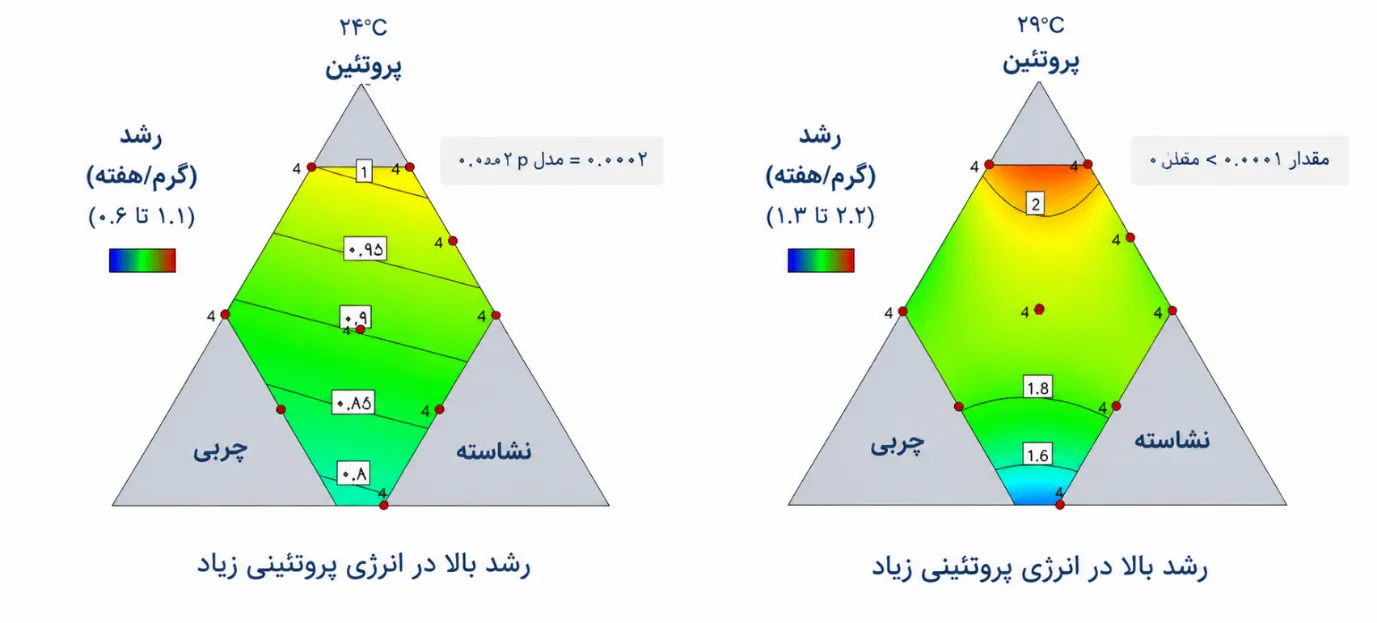
– At 29°C, shrimp grew about twice as fast as at 24°C.
– Higher-protein diets consistently produced the highest growth rates. - Feed conversion ratio (FCR)
– The lowest FCR values (1–1.9), regardless of temperature, were observed in high-protein diets. - Protein retention
– Higher-starch diets resulted in greater protein deposition in shrimp tissues compared to high-fat diets. - Gut microbiome changes
– Temperature had no significant effect on microbiome diversity or composition.
– High-starch diets showed greater microbial diversity than high-protein or high-fat diets.
Conclusion
Protein remains the primary energy source for achieving maximum growth performance.
Starch can serve as a complementary energy source, improving protein retention and enhancing gut microbial diversity.
Lipids perform similarly to starch in supporting growth but are less effective in protein retention.
For different rearing temperatures, precise adjustment of protein, fat, and starch ratios in feed can create an optimal balance between cost, performance, and reduced nitrogen loss.