
Why FCR is the most important profitability indicator in aquaculture farms?
In the modern aquaculture industry, the fine line between a profitable farming period and a heavy economic failure depends on the management of a key variable: Feed Conversion Ratio (FCR). Economic studies indicate that feeding costs alone account for 60 to 70 percent of the total operating costs of a fish or shrimp farming operation. This figure means that a significant portion of your investment enters the water daily through feed; therefore, every gram of feed that is not converted into flesh and biological growth directly translates into capital waste and a severe decline in the farm’s profit margin.
The Feed Conversion Ratio is essentially a comprehensive reflection of the biological efficiency of the stock, the physical and chemical quality of the feed, and the management acumen of the farmer. In an environment where market fluctuations and the costs of protein inputs pose serious challenges for producers, achieving the lowest possible FCR becomes the most powerful lever for reducing costs and ensuring economic sustainability of the business.
However, reducing the Feed Conversion Ratio is not achieved simply by purchasing a high-protein feed; rather, it relies on a golden triangle that includes “accurate biochemical formulation”, “physical quality of the feed and processing technology”, and “principled feeding management”.
Saddad Daneh Novin, as one of the pioneers in the production of specialized and engineered aquaculture feeds, has compiled this comprehensive guide to analyze the hidden dimensions of FCR based on cutting-edge scientific findings and field experiences in industrial plans, providing aquaculturists and specialists in this field with operational solutions for its optimization.
The concept of Feed Conversion Ratio (FCR) in simple and technical terms
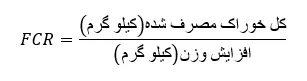
In the biomechanics and nutrition of aquatic species, Feed Conversion Ratio (FCR) is a key metric for evaluating the biological efficiency of feed utilization. Simply put, FCR indicates how many kilograms of feed are needed to produce one kilogram of body weight (biomass) in fish or shrimp. Therefore, unlike many industrial indices, the lower the number of FCR, the higher the feeding efficiency and the better the performance of the farm.
The formula and method of accurately calculating FCR in fish and shrimp farms
Regular and accurate calculation of the Feed Conversion Ratio throughout the rearing period is the cornerstone of scientific management in aquaculture farms. The basic formula for calculating the Feed Conversion Ratio based on live biomass is as follows:
A tangible numerical example in a trout farm
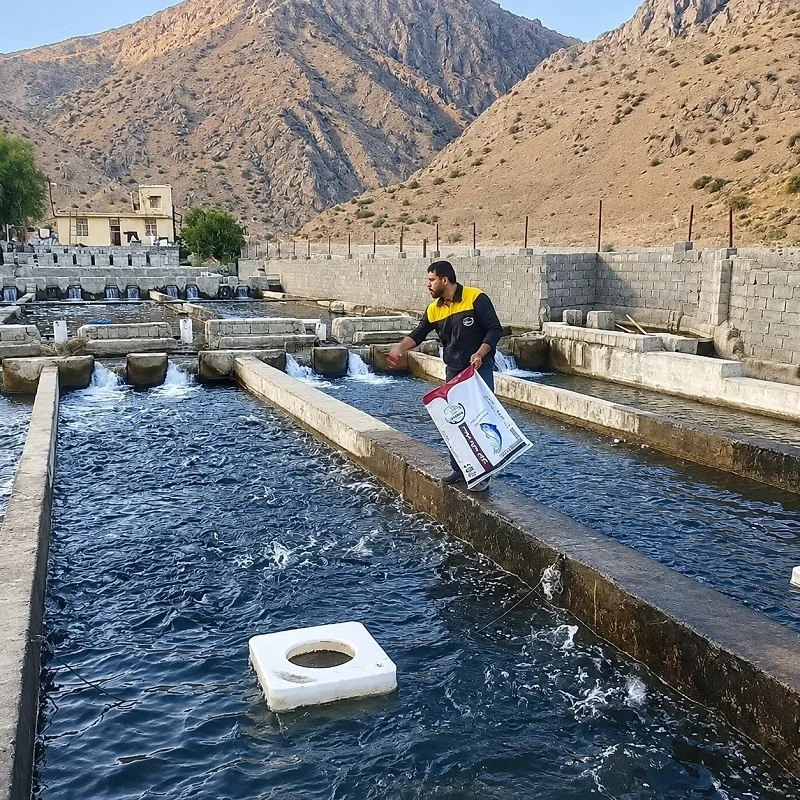
Suppose in an octagonal pond, 10,000 juvenile trout with an average weight of 50 grams have been released (initial biomass = 500 kilograms). After a 60-day period, the biomass of the pond has increased to 3,500 kilograms, during which 3,300 kilograms of extruded feed has been consumed. The Feed Conversion Ratio is calculated as follows:
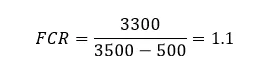
This figure indicates that for every 1.1 kilograms of feed consumed, 1 kilogram of fish flesh is produced.
Common errors in data recording and the impact of losses on the actual conversion ratio
In industrial conditions, obtaining real FCR data is often skewed due to monitoring errors in the farm. The most common errors include:
Ignoring the weight of losses in interim calculations: If the dead fish are not recorded in periodic calculations, the actual weight gain of the stock is underestimated, and FCR is incorrectly shown to be higher than reality.
Biometry Bias: Failure to adhere to random sampling protocols in sampling and using improperly calibrated weighing containers distorts the average weight of the stock.
Lack of separation of moisture loss and feed fines: Feeds with a low Pellet Durability Index (PDI) are crushed into fines during transport and loading. These particles are lost in the water but recorded as consumed feed.
Daily recording of environmental parameters alongside continuous monitoring of feeding is a key tool for D&R teams like Saddad Daneh Novin to develop accurate patterns to optimize Feed Conversion Ratio in cooperating farms.
Aquatics compared to terrestrial livestock and poultry: The metabolic superiority of fish
Aquatic species have a significantly higher efficiency in converting feed into edible protein compared to terrestrial livestock. To better understand this biological advantage, let’s take a look at the global average FCR:
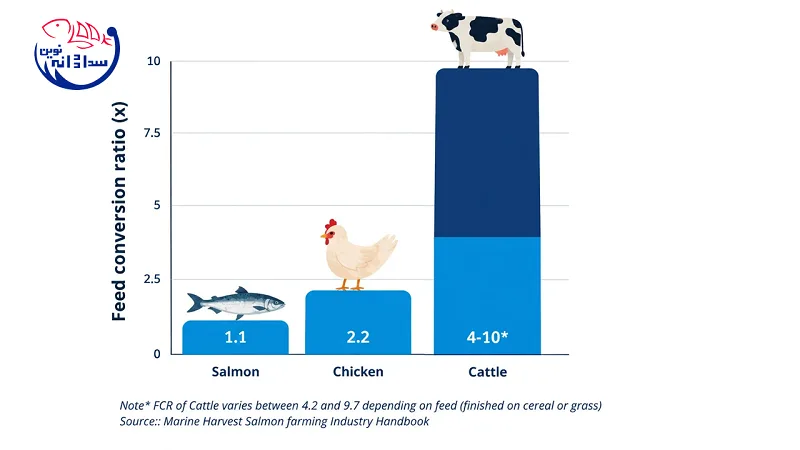
This remarkable advantage is due to three unique physiological and physical factors in aquatics:
Cold-bloodedness: Fish do not expend energy from their diet to maintain a constant body temperature; therefore, a large portion of the net energy from feed is directed straight towards the synthesis of muscle protein.
Buoyancy in water and absence of a heavy skeletal system: Due to Archimedes’ principle and buoyancy, fish do not require a heavy skeleton to overcome the force of gravity as mammals do; consequently, their maintenance energy is very low.
Excretion of ammonia instead of urea or uric acid: Aquatic species excrete excess nitrogen in the form of gaseous ammonia (3NH) directly through their gills into the water. The conversion of ammonia to urea (in mammals) or uric acid (in birds) is an ATP-dependent process that is metabolically costly and from which aquatic species are exempt.
Physiological and environmental factors impacting unfavorable increases in FCR
The Feed Conversion Ratio is not a static variable; it is rather a direct function of the complex interactions between hydrochemical conditions of the water and the physiology of the internal organs of aquatic species. Even the most advanced diets will see sharp reductions in consumption efficiency and spikes in conversion ratios if environmental instability or disturbances in digestive morphology occur.
Critical environmental factors: The metabolic traps of temperature, oxygen, and stress
The aquatic environment directly affects the rate of biochemical reactions and the secretion of digestive enzymes:
Water temperature and thermal comfort range (Thermal Optima): Aquatic species are cold-blooded animals, and their basal metabolic rate (BMR) is directly proportional to water temperature. As the temperature exceeds the optimum threshold (for example, above 16–17 degrees Celsius in trout), the maintenance needs of fish increase drastically; consequently, a significant portion of food energy is diverted from synthesizing muscle tissue to undergo basal metabolism and respiration. At low temperatures, stomach emptying rates decline and the activity of digestive enzymes is suppressed, leading to both scenarios resulting in growth and increased FCR.
Dissolved oxygen (DO) and aerobic scope: Oxygen is necessary for burning nutrients in the Krebs cycle and oxidative phosphorylation. When the oxygen level in water drops below the critical range (below 6 mg/L in trout or below 3 mg/L in carp), fish enter inefficient anaerobic metabolism. In hypoxic conditions, appetite is suppressed, nutrient absorption efficiency declines, and a great deal of energy is expended on active ventilation of the gills, which immediately degrades feed conversion efficiency.
Chronic stress and cortisol secretion: Severe fluctuations in pH, accumulation of un-ionized ammonia (3NH), and frequent disturbances in the farm raise serum cortisol levels. Cortisol is a catabolic hormone that halts protein synthesis and breaks down muscles into glucose; a process that is the primary enemy of optimal FCR.
Low oxygen / thermal fluctuations ─── cortisol secretion ─── increased protein catabolism ─── exponential spike in FCR
Age, live weight, and the integrity of the mucosal barrier in the digestive system, in addition to the aquatic climate, are also determining endogenous factors:
Biometric changes and life stage: Juvenile fish exhibit the highest specific growth rate (SGR) and the lowest biological conversion coefficient since the slope of the catabolism to anabolism graph is highly positive. As age and weight increase and fish approach market weight, maintenance requirements increase, and the organism’s natural inclination to store fat tissue (which is bioenergetically more expensive than protein tissue) grows; a trend which itself sharpens the slope of increasing FCR.
Healthy epithelium and gut morphology (Gut Integrity): True digestion and absorption occur in the microvilli of the intestine. The emergence of subclinical enteritis due to undesirable anti-nutritional factors (ANFs) or pathogenic bacterial loads destroys tight cellular junctions and reduces the height of intestinal villi. This leads to severe malabsorption, resulting in the excretion of unaltered amino acids and minerals, thereby significantly increasing FCR despite apparent appetite.
For this reason, Saddad Daneh Novin has standardized the use of mucosal stabilizers and prebiotics that enhance the gut microbiota in the formulation of their specialized extruded feeds to safeguard the digestive system against environmental stresses.
The role of formulation and nutritional balancing in improving the Feed Conversion Ratio
Formulating aquatic feed is more than simply combining percentages of raw protein and fat; achieving the lowest FCR requires precise molecular engineering, establishing balance in bioenergetic pathways, and maximizing the biological value of raw materials within the digestive system. In an industrial scale, any misalignment of micronutrients will directly lead to nitrogen excretion, metabolic loss, and rising conversion ratios.
The balance of digestible energy to protein ratio (DE:DP) and the protein-sparing effect
One of the key indicators in modern feed formulation for carnivorous and omnivorous aquatic species is managing the digestible energy to digestible protein ratio:
Protein-Sparing Effect: Protein is the most expensive component of the diet, and its primary role is the biosynthesis of new muscle tissue. If the non-protein energy of the diet (derived from fats and gelatinized carbohydrates) is insufficient, fish are forced to deaminate valuable amino acids and burn their carbon in the Krebs cycle for ATP production; a costly process which results in protein loss, alongside severe ammonia excretion into the water and a spike in FCR.
The risks of excess energy: Conversely, imbalanced increases in the DE:DP ratio beyond the organism’s needs will lead to the accumulation of visceral fat, fatty liver, and premature satiation which interrupts feeding; consequently, fish will cease to consume feed without receiving sufficient amounts of essential amino acids, leading again to reduced growth efficiency.
The formulation team of Saddad Daneh Novin ensures this metabolic balance in their products by continuously monitoring optimal DE/DP ratios (approximately 20 to 24 kilojoules per gram of protein depending on fish weight and species).
Ideal amino acid profile and digestibility of fatty acids n−3/n−6
The efficiency of converting feed protein into muscle is guided by “Liebig’s barrel principle”: tissue growth is dependent on the first limiting amino acid.
The concept of ideal protein: Assessing protein based on crude content (CP) is an obsolete approach; what determines conversion ratio is the balanced provision of essential amino acids, especially lysine, methionine, threonine, and tryptophan in synthetic and bioavailable forms. Any imbalance reduces amino acid reabsorption rates and pushes the remainder towards catabolism.
Profile of long-chain unsaturated fatty acids (LC-PUFA): Coldwater species such as trout require sufficient amounts of omega-3 fatty acids, particularly EPA and DHA. The balance of omega-6 and omega-3 fatty acids plays a crucial role in the fluidity of cell membranes, permeability of enterocytes, and activation of intestinal membrane transporters. Providing these fatty acids from fish oil and high-quality phospholipids accelerates intestinal absorption and minimizes FCR.
The role of prebiotics, probiotics, and exogenous enzymes in enhancing digestive efficiency
Utilizing digestive resilience supplements is a distinguishing factor in new-generation feeds:
Specialized heat-stable enzymes: Adding phytases and carbohydrases (like xylanase and beta-glucanase) breaks down resistant bonds and anti-nutritional factors (NSPs), releasing complexed phosphorus and minerals.
Synbiotics and immune stimulants: The combination of prebiotics such as mannan-oligosaccharides (MOS) and beta-glucans increases the length and density of the microvilli in the small intestine (increasing the absorptive surface area) and optimizes enzyme secretion, breaking down the digestive efficiency barrier and improving FCR by 5 to 10 percent.
Processing technology and the physics of feed pellets; the missing link to optimal FCR
You might think that the best formulation guarantees the best FCR, but the industrial truth is: processing technology determines the ultimate fate of that formulation. Even if the diet is biochemically complete, if the physics of the feed does not align with the nutritional behavior of the aquatic species and the environmental conditions of the pond, nutrient loss in the water will be inevitable.
Extrusion versus compressed pellets
The difference between simple pelleted feed and extruded feed lies in “dry density” versus “heat cooking.” In the extrusion process, the feed is subjected to high pressure and temperature. This results in complete gelatinization of starch and protein structuring, which yields:
- Increased digestibility: Complex carbohydrate bonds are broken, making nutrient absorption in fish gut significantly easier.
- Reduced water activity: This increases the shelf life of the feed.
In simple pellets, particles are compressed without profound structural changes; this means that a large part of the nutritional potential of the diet is wasted in the water before being absorbed by fish.
Key physical indices: Golden quality standards
For FCR to remain at its best, the feed must pass through the following standard filters:
Pellet Durability Index (PDI): This index indicates the feed’s resistance to breakage and wear during transport. Each 1 percent increase in fines is not only a direct waste of cost but also pollutes the water and increases the organic load, directly degrading FCR. The PDI standard in the extruded feeds of Saddad Daneh Novin has been set above the usual benchmarks to minimize losses.
Water stability: The feed must maintain enough time (from 5 to 20 minutes depending on the species) in the water to allow aquatics to feed, but should not be too hard to be indigestible. Excessive stability also means indigestible feed for the fish’s digestive system.
Pores and buoyancy: Extrusion allows control over the feed’s density (floating, sinking, or rapid-sinking). Aligning production technology with feeding behavior (for example, surface feeding of trout or bottom feeding of shrimp) is the key to reducing feed wastage.
The importance of coating and preventing fat leaching
Extruded feeds have a high oil absorption capacity. Here, Vacuum Coating technology plays a vital role.
In regular oiling, oil only remains on the surface and quickly leaches into the water; such leaching of oil means losing a significant portion of the feed’s energy before it is swallowed. However, in vacuum coating, oil penetrates deep into the structure of the pellet and is “trapped.” This technology not only preserves the energy-rich value of the diet but also prevents a fat layer from forming on the water’s surface (which hinders oxygen exchange) and aids in stabilizing FCR by reducing pollution.
Feeding management and farming techniques to reduce FCR
Even with the highest quality extruded feed, if distribution management in the pond is not done correctly, part of the aquatic growth potential is wasted in the water. Feeding management is an art that integrates statistics and biology to prevent “overfeeding” or “underfeeding.”
Precise management requires daily monitoring of two factors:
- Temperature: Fish metabolism changes with temperature; at optimal temperatures, appetite increases, while in temperature fluctuations, there is a need to reduce the feed dose.
- Active biomass: Instead of relying on theoretical figures, the pond biomass should be periodically updated (for example, every 15 days) through careful sampling. Any discrepancies between actual biomass and the feed dose will directly skew FCR.
Manual feeding versus smart feeders
In choosing a feeding method, there exists a classic contradiction:
- Manual Feeding: Its greatest advantage is “observing feeding behavior.” The farm technician can immediately adjust the feeding amount by observing fish reactions to feed (swallowing speed or reduced appetite). If done by skilled labor, this method is one of the most precise.
- Smart feeders: These systems utilize sensors to monitor fish activity (such as detecting fish strikes on a pendulum or using image processing cameras) to adjust feeding based on the actual demand of the fish. Smart feeders eliminate “human error” (worker fatigue or haste) and prevent the creation of a “satiation point” by gradual distribution, which results in maintaining FCR stability 24 hours a day.
Overfeeding: The silent killer of profitability
Overfeeding is not just wasting money on feed; it is a “biological bomb” in the pond.
Every extra gram of feed that is not consumed by fish:
- Degrades water quality: The decomposition of feed leftovers on the pond floor significantly raises the organic load (BOD/COD) and increases ammonia levels (3NH).
- Causes stress and disease: The constant presence of ammonia results in chronic stress, immune suppression, and reduced digestive efficiency in fish, which inevitably leads to an irrational increase in the conversion ratio.
The technical teams of Saddad Daneh Novin assist farmers by providing management consultations alongside specialized feeds, helping them establish a balance between costs and growth based on the “rule of feeding to satiety and not beyond.”
Economic analysis: How much profit does a 0.1 improvement in FCR generate?
In aquaculture accounting calculations, there is a common perceptual error: focusing solely on “the price per kilogram of feed” rather than “the feed cost per kilogram of produced weight.” In scalable businesses, fluctuations even by one-tenth (0.1) in the conversion ratio can differentiate between significant net profit and breakeven.
Economic simulation
Suppose a farm aims to produce 100 tons (100,000 kilograms) of live trout biomass per year. Let’s analyze the effect of reducing FCR from 2.0 to 1.1, assuming a hypothetical average feed price of 100,000 tomans per kilogram:

The direct economic result: A mere 0.1 improvement in the conversion ratio reduces feed consumption by the farm by 10 tons, equivalent to 1 billion tomans in net cash savings over a 100-ton cycle.
The industrial paradox: Cheap feed or engineered feed?
The table below illustrates why purchasing seemingly cheap feed with an unfavorable FCR is, in reality, a financial trap:
Table 1: Comparison of cheap and quality feed
| Evaluation Index | Cheap Feed | Engineered Extruded Feed |
| Assumed price per kilogram | 90,000 tomans | 100,000 tomans |
| Expected FCR | 1.35 | 1.10 |
| Feed needed for 1 kilogram of meat | 1.35 kilograms | 1.10 kilograms |
| Feed cost per kilogram of fish | 121,500 tomans | 110,000 tomans |
As seen, the farm that chose the more expensive but high-efficiency extruded feed spends 11,500 tomans less for each kilogram of fish produced! This saving is in addition to reduced treatment costs, improved water quality, and a shorter rearing period.
Solutions by Saddad Daneh Novin for producing feed with minimal conversion ratio
Achieving the lowest FCR in ponds requires simultaneous synergy between “precise formulation engineering” and “advanced processing technology”. Saddad Daneh Novin produces feed that maximizes digestibility and minimizes physical loss in water by integrating modern aquatic nutrition knowledge and state-of-the-art extrusion lines.
Why is Saddad Daneh Novin feed the first choice for leading farms?
Extrusion Technology: Precise control of starch gelatinization and high hydraulic stability prevents nutrient leaching, maximizing fat and energy absorption rates.
Precision Nutrition and Customized Feed Formulation: The research and development team at Sada Daneh Novin relies on optimizing the ratio of digestible energy to crude protein and fully balancing ideal amino acids to prevent protein from being wasted as an energy source.
Technical Consultation and Farm Monitoring: Our specialists are not just feed suppliers; they stay with you by providing customized feed formulation programs based on water quality conditions, temperature, and farm biomass to achieve a competitive FCR and maximize profitability.
For specialized feed formulation consultation, an extruded product catalog, and optimization of your farm’s conversion ratio, contact the technical experts at Sada Daneh Novin today.
Frequently Asked Questions About Feed Conversion Ratio (FCR) in Aquaculture
1. What is the ideal Feed Conversion Ratio (FCR) for rainbow trout?
In standard industrial farming systems (such as recirculating aquaculture systems and flow-through systems with proper oxygen management), the ideal economic conversion ratio for rainbow trout using engineered extruded feed is between 1 to 2. Achieving an FCR of less than 1 is also possible under optimal laboratory conditions or during early growth stages (fingerling), but any figure above 1.5 indicates a deficiency in feed quality, aeration errors, or physical losses in feed management.
2. Why is the FCR in warm-water farms (carp and tilapia) higher than in trout?
Rainbow trout are carnivorous, and their digestive system is designed for metabolizing high-quality proteins and dense fats, whereas carp and tilapia are omnivorous or herbivorous and consume diets with lower energy density and higher fiber. Additionally, in earthen ponds for carp farming, some of the biomass is supplied through live feed, which complicates the accurate calculation of dry matter input, raising the apparent FCR to a range of 2 to 2.5.
3. What is the difference between biological FCR and economic FCR, and which one indicates profitability?
- Biological FCR: The ratio of total feed consumed to the weight gain attributable only to live fish (losses are excluded) and is applicable for assessing feed digestive efficiency in the laboratory.
- Economic FCR: The ratio of total feed purchased and distributed to the actual biomass weight sold and harvested (accounting for losses and wasted feed). The primary financial profitability indicator for farmers is the economic FCR.
4. What is the most important immediate action to reduce conversion ratio when the FCR is high?
Emergency measures to control FCR on the farm include three consecutive steps:
- Check Dissolved Oxygen (DO): Ensure that the oxygen in the output water is not less than 6 mg per liter.
- Adjust Feed Rate (Stop Overfeeding): Reduce the daily feed dose by 10 to 15 percent and split feeding into more frequent intervals until appetite monitoring is completed.
- Examine Feed Physical Stability: Measure the sinking rate and durability of the feed in water; if the feed disintegrates before ingestion, adjustments should be made to the proportion of feed fines or feed technology.