
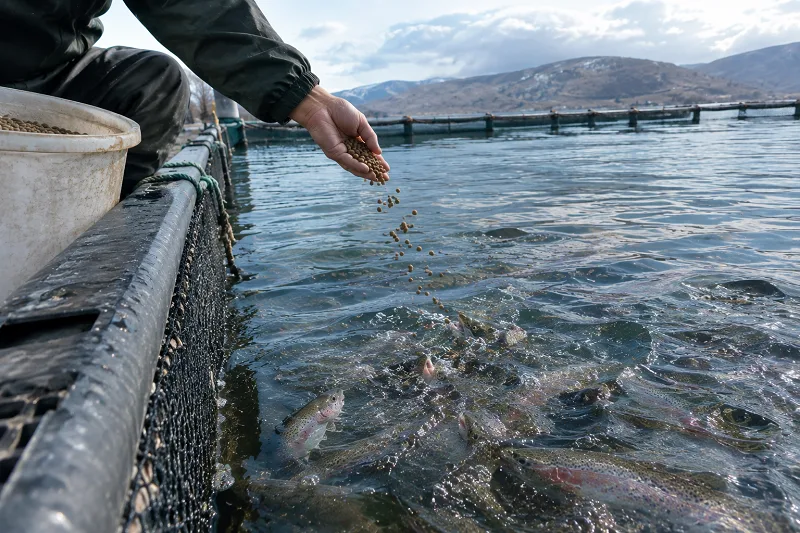
Why is feed selection the most important economic decision in trout farming?
In the rainbow trout farming industry, farm management is a complex equation where “cost” and “performance” are weighed against each other. If we realistically consider the cash flow of a farm, over 60 to 70 percent of your current expenses can be directly summarized in feed purchases. This means feed is not just an input but the primary investment of your farm.
Many farmers mistakenly believe that “buying cheap” means “cost optimization.” However, from an expert perspective at Sedad Daneh Novin, we consider this approach a “economic trap.” Choosing a low-quality feed not only doesn’t reduce costs but imposes a high feed conversion ratio (FCR) and lowers flock health, significantly reducing your final profit by the end of the production cycle. In fact, buying quality feed is not a cost; rather, it is an investment in “shorter growth time” and “higher profit.”
Feed Conversion Ratio (FCR); How to reduce costs with the right choice?
The feed conversion ratio or FCR is the heartbeat of your profitability. If your FCR increases from 1.2 to 1.4, it may seem like a small number at first glance; however, on an industrial scale, this means you have consumed an additional 200 grams of feed to produce one kilogram of fish. Multiplying this number by the total tons produced on your farm gives you a figure that comes directly out of your pocket.
Why does quality feed lower FCR?
High digestibility: Quality feeds formulated by our R&D teams contain raw materials with high digestibility coefficients. When fish absorb more feed, they produce less waste and devote more energy to growth.
Extrusion process: Our production technology at Sedad Daneh Novin is based on precise extrusion. This process ensures that the starch in the feed is well-cooked (gelatinized), which directly increases nutrient absorption rates and minimizes FCR.
Balanced energy and protein: Cheap feeds often lack proper balance; fish are forced to use valuable protein for energy (instead of growth), which is an economic disaster. Standard feeds provide the necessary energy from cheaper sources (like quality fats) so that protein is used for muscle building.
The direct impact of feed quality on survival rates and flock health
Feed is not just fuel for growth; it is the fish’s “immune system.” In farming environments where the risk of bacterial and parasitic diseases is always present, a quality feed can make the difference between “great profit” and “catastrophic losses.”
How does quality feed ensure flock health?
Prevention of digestive diseases: Feeds made from old or low-quality raw materials (with high microbial load or fat oxidation) are the primary cause of gut inflammation and systemic diseases. At Sedad Daneh Novin, we rigorously monitor the health of each incoming batch through strict QC to prevent the transmission of pathogens.
Antioxidants and micronutrients: Scientific feeds are rich in optimal levels of vitamins and minerals that help the fish’s immune system withstand environmental stresses (such as temperature changes or water quality).
Water stability: Feed that disintegrates quickly in water not only fails to satiate fish but also pollutes the water and raises ammonia levels. A contaminated environment is a major cause of mortality. The physical quality of our pellets is designed to minimize dust in the water, ensuring cleaner water and healthier fish.
5 Technical Features of Standard Trout Feed You Should Know
In the modern aquaculture industry, buying feed is no longer a decision based solely on price or the appearance of pellets. For a grower seeking real profitability and reduced FCR, feed is considered a “technological tool.” At the R&D department of Sedad Daneh Novin, we believe that feed quality consists of a set of engineered parameters that must work in unison to achieve the best results on fish bodies. If you are looking to enhance your farm’s performance, you need to look beyond just a simple analysis table and evaluate these 5 key features when purchasing:
Balanced protein and energy; the golden ratio in the diet
A strategic mistake made by many producers is to focus solely on the “percentage of crude protein.” In trout nutrition science, protein is the most expensive component of the diet. The key concept here is “Protein Sparing Effect”. Rainbow trout requires essential amino acids for muscle growth, but if the energy balance is not properly maintained in the diet, the fish will have to burn these valuable proteins not for muscle building but for metabolic energy. This is an economic disaster!
In proper formulation, the required energy for fish is provided through processed fats and carbohydrates so that proteins are fully utilized for growth (muscle building). By closely monitoring the amino acid profile, especially lysine and methionine (which are limiting amino acids in fish), we ensure that your diet is in the best possible condition. This means reduced nitrogen waste in the water and increased growth rates in fish.
Water Stability; a factor to prevent capital waste
Water stability is a test in which low-quality feeds fail. Physical stability means the ability of the pellet to maintain its integrity after contact with water. A feed pellet that disintegrates quickly means you are throwing your money into the bottom of the pond. When pellets break down, micronutrients, vitamins, and fat-soluble substances dissolve in the water before the fish can consume them, resulting in waste.
Besides financial losses, this phenomenon increases the organic load of the water and raises ammonia levels, which is a major cause of diseases and stress in the flock. Sedad Daneh Novin feed is designed to maintain optimal physical stability (usually between 20 to 40 minutes, depending on pellet size). This stability is achieved through the use of natural binders and precise cooking processes. In our quality control (QC) department, we periodically test this stability under conditions similar to those of the ponds to ensure that the pellets maintain their nutritional value until they enter the fish’s mouth.
The importance of the extrusion process and high digestibility
Extrusion technology is the heart of quality in modern feeds. It is not just a method for cooking or buoying food; it is a process that changes digestibility. The trout’s digestive system is short and has a limited ability to digest complex carbohydrates. In the extrusion process, under high pressure and controlled temperature, the molecular bonds of starch are broken down, and “gelatinization” occurs.
This process not only cooks the starch but also deactivates many anti-nutritional factors present in plant raw materials (such as phytic acids or enzyme inhibitors). What’s the result? A food that fish can easily digest. Digestible food means less waste in the pond and a lower feed conversion ratio (FCR). At the Sedad Daneh Novin factory, we use temperature and pressure sensors throughout the extrusion line to ensure that every pellet is cooked under the best conditions.
Uniformity in pellet size; the key to reducing stress and achieving uniform growth in fish
Have you ever considered the impact of “uniformity” in pellets on the growth of the flock? If a bag of feed contains very small and very large pellets mixed together, it creates an inequality in the fish’s food table. Larger fish will eat the bigger pellets faster, while smaller fish will lag behind. This means an increase in size variation within the flock, which means you will face mismatched fish at harvest time.
Moreover, the presence of “dust” or particles in the feed not only results in a net loss of capital but also pollutes the gills and water transparency. At the Sedad Daneh Novin production line, we use vibrating sieves to ensure product uniformity. Every pellet has the size printed on the bag. This uniformity allows your fish to feed at the same rhythm, reducing food competition and minimizing flock stress; the result of this accuracy is uniform growth and market acceptance of your fish at harvest.
Fat absorption rate; ensuring energy and palatability
Fat is the main source of energy and the provider of essential fatty acids (like omega-3) in trout feed. However, how fat is added to the pellets is an industrial art. In non-standard methods, fat is merely sprayed on the surface of the pellets, which causes rapid oxidation (rancidity) and reduces palatability.
The technology of Vacuum Coating allows fat to penetrate into the depths of the pellet’s pores. What’s the result? First of all, the fat inside the pellet is protected from air oxygen, extending the shelf life of the feed. Secondly, when the pellet comes in contact with water, it does not easily lose its fat and remains rich until consumed. Thirdly, this penetrated fat makes the feed very “palatable” for fish; the aroma and flavor of fresh fat stimulate the fish’s appetite, even in the cold days of the year or in stressful environmental conditions.
Buying Guide Based on Growth Stage; Which pellet is suitable for your fish?
A strategic mistake in selecting the size or formulation of feed is one of the fastest ways to increase feed conversion ratio (FCR) and reduce profitability. Rainbow trout has completely different metabolic needs at various life stages. Fish in the larval stage requires “high nutrient density” for rapid growth, while in the grow-out stage, the focus shifts to “energy optimization” and “production cost reduction.”
Feeding tips in the larval and starter phase
In the larval and starter phase, we are dealing with fish whose digestive system is developing. This period is the “golden age” that determines the survival rate of the flock.
Prioritize easily digestible proteins: At this stage, the feed should contain at least 50 to 55 percent protein with very high digestibility (preferably from marine protein sources like high-quality fish meal). In our view at R&D, the use of plant proteins at this stage should be very limited, as the larval digestive system is not yet equipped with the necessary enzymes to digest complex carbohydrates.
Pellet size and managing physical quality: In the starter phase, even the slightest variation in pellet size can lead to food waste and water pollution.
Feeding frequency: The technical point here is that fish at this stage have a small stomach capacity but a high metabolic rate. Therefore, our recommendation is to increase feeding frequency with small amounts. Suitable starter feeds are designed to minimize nutrient washing into the water, even with excess spillage, to prevent a drop in water quality.
Nutrition management in the grow-out phase (optimizing growth)
Once you move past the starter phase, our strategy shifts from “maximum structural growth” to “optimizing FCR and controlling body composition.” In the grow-out phase, fish need more energy for rapid weight gain.
Managing the balance of energy to protein: In this phase, if the protein level is too high, fish will use protein to provide energy, which leads to increased nitrogen waste (ammonia) in the pond. Sedad Daneh Novin grow-out feeds are formulated with an optimal level of lipids (fats) to convert protein into muscle-building while providing cheaper energy sources.
Responses to environmental conditions: In different seasons (temperature changes in water), the fish’s energy needs change. In lower temperatures, we adjust the formulation to enhance digestibility since the fish’s digestive enzymes function slower at lower temperatures.
QC note for buyers: Always remember that changes in pellet size (for example, from size 4 to 6 mm) should be “gradual.” Our experts recommend mixing two products during the size changeover period to prevent shocking the fish’s digestive system. This precise management is what distinguishes an ordinary producer from a professional grower.
Storage challenges; why even the best feed can spoil?
Producing a high-quality and balanced extruded feed is just half the journey to successful nutrition; the other half is maintaining the biochemical integrity of the pellets until consumption. Rainbow trout feed has a very sensitive and perishable matrix due to the high concentration of polyunsaturated fatty acids (PUFAs) and high protein levels. The biggest management error is to assume that extruded feed is immune to unfavorable environmental conditions due to the heat treatment process. Improper storage activates a chain of destructive reactions that render the feed’s biological value to zero.
Optimal storage conditions: The silent enemies of feed (moisture and temperature)
Temperature and humidity are the two main catalysts in the process of feed quality degradation that act synergistically:
Temperature and the crisis of lipid oxidation: Storing feed at temperatures above 25 degrees Celsius exponentially raises the rate of lipid oxidation. The result of this process is the production of free radicals, hydroperoxides, and toxic aldehydes. Rancid oil not only causes food rejection due to a severe drop in palatability but also leads to serious liver damage, immune deficiency, and increased mortality. Additionally, high heat inactivates sensitive vitamins such as vitamin C and E.
Humidity and the threat of mycotoxins: The relative humidity of the storage area should always be kept below 65 to 70 percent, and the moisture content of the feed below 10 to 12 percent. Insufficient ventilation and phenomena like “wall sweating” or direct contact of bags with concrete floors provide an ideal environment for the colonization of Aspergillus and Penicillium fungi. The secretion of fungal toxins (mycotoxins), even without visible changes in the pellets, can lead to immune system suppression and damage to the kidneys and liver of the trout.
The golden protocol of Sedad Daneh Novin: Arrange the bags on wooden or plastic pallets at least 15 centimeters off the ground and 50 centimeters from the walls. The storage area should have continuous ventilation, be dark (to protect against photooxidation), and be cool (below 20 degrees Celsius). The FIFO (first in, first out) rule is essential for maintaining the freshness of formulations until they reach the fish’s mouth.
Why is “Sedad Daneh Novin” trout feed your smart choice?
In a market full of claims, sustainable competitive advantage can only be achieved through the integration of nutritional science and precise engineering processes. Sedad Daneh Novin produces feed that guarantees your economic feed conversion ratio (FCR) and flock health, relying on advanced infrastructure and expert knowledge.
Precise quality control (QC); from raw materials to final product
Our monitoring system is a multi-stage, isolated process. The thorough screening of incoming shipments—from measuring tube 200 and oil peroxide values to TVN indexes of fish meal—prevents low-quality raw materials from entering the extrusion cycle. During production, key physical features of the feed, including hardness, durability (high PDI), starch gelatinization rates, and water stability are carefully assessed. Oil coating under vacuum (Vacuum Coating) ensures that feed particles are dust-free, uniformly absorb fat, and reach the grower without surface greasiness.
The scientific support of the R&D unit in feed formulation
The research and development (R&D) team at Sedad Daneh Novin sees formulation as more than just meeting minimum protein requirements. We formulate rations based on the concept of “ideal protein,” the optimal P/E ratio, and the ideal digestibility of essential amino acids. By monitoring the physiology of trout digestion in farming conditions in Iran, functional additives, immune boosters, and advanced binders are integrated into the diet to achieve the highest growth efficiency with the least organic load in the pond. Choosing Sedad Daneh Novin is an investment in knowledge that directly translates into your farm’s profitability.
Frequently Asked Questions by Farmers About Feed Purchase
1. When is the best time to change pellet size in trout?
The size change should not be sudden; this process should take place over 7 to 10 days and involve a gradual mixing of two sizes (ratios of 25%, 50%, and 75%) based on average biometric weight and fish mouth size to prevent growth stunting.
2. How do we test the physical stability of feed in water on the farm?
Put a quantity of feed in a glass of clear water at the same temperature as the pond. Standard Sedad Daneh Novin feed should retain its integrity for at least 20 minutes without disintegrating or creating greasy spots on the water’s surface.
Conclusion and Expert Consultation
Buying trout feed is the biggest variable in determining your farm’s profitability. Even a 0.1 unit decrease in FCR can revolutionize production costs. At Sedad Daneh Novin, we are not just feed sellers; our D&R and nutrition experts work with you to establish the most precise feeding strategy based on water analysis, local temperature, and flock biometrics.
To receive a customized feeding schedule and free consultation with our specialists, contact the technical department of Sedad Daneh Novin today at this link.