
Why is Salmon Feed Important for Performance in Aquaculture?
In rainbow trout farming, feed is one of the most important factors affecting growth, health, and profitability of the farm. The quality of the feed directly influences the growth rate of the fish, feed conversion ratio, mortality rates, carcass quality, and water conditions. Feed made from high-quality and digestible raw materials can meet a larger portion of the energy and nutrients required by the fish, thereby reducing the amount of feed required to produce each kilogram of fish.
Conversely, using low-quality or inappropriate diets for the growth stage of trout may lead to reduced appetite, uneven growth, increased nutrient excretion, accumulation of organic matter in the water, and a higher likelihood of disease occurrence. Furthermore, high dust content, low pellet stability in water, or poor fat distribution can increase feed wastage and environmental pollution in the aquaculture environment.
This article discusses the main components of rainbow trout feed, protein and energy requirements, the roles of fats, vitamins, and minerals, the physical characteristics of feed, and selection criteria for suitable diets at different growth stages. Specialized producers such as Sadad Daneh Novin can improve nutritional and economic performance in trout farms through scientific formulation, careful selection of raw materials, and quality control of the final product.
What Nutritional Needs Does Rainbow Trout Have?
Rainbow trout (Oncorhynchus mykiss) as a carnivorous species need a dense, bioavailable, and scientifically formulated diet. To achieve maximum growth rates, reduce feed conversion ratio (FCR), and maintain flock safety, the diet must provide five fundamental components: protein with a balanced amino acid profile, lipids with an appropriate ratio of unsaturated fatty acids (such as EPA and DHA), highly digestible carbohydrates derived from extrusion processing, and precise amounts of absorbable vitamins and minerals. The careful balance of these components ensures that protein energy in the diet is not used for daily metabolism but is directly allocated for muscle tissue development. At Sadad Daneh Novin, achieving this biological balance is realized through continuous monitoring of dry matter and controlling the physical and chemical parameters of the feed.
Protein and Amino Acid Requirements of Trout
Protein is the driving force behind somatic muscle growth and the continual repair of physiological tissues in trout. However, in modern aquaculture nutrition, the percentage of “crude protein” is not a complete indicator; what is fundamentally important is digestible protein and the biological value of consumed sources. Indigestible protein not only reduces absorption but also disrupts the water environment quality by increasing nitrogen load.
From a biochemical perspective, trout does not require protein itself but needs a precise profile of 10 essential amino acids. Among these, lysine is a key precursor in forming muscle proteins, methionine supplies methyl groups in basic metabolism, and threonine ensures the integrity of the gut mucosal membrane and immune system resistance. A deficiency or imbalance in even one of these limiting amino acids will slow down protein synthesis and reduce the economic efficiency of the farm.
Fat and Essential Fatty Acid Requirements of Trout
Fats are the primary source of concentrated energy in trout diets and maximize somatic growth by creating a “protein-sparing effect.” Polyunsaturated omega-3 fatty acids, particularly EPA and DHA, play a vital role in maintaining cellular membrane fluidity, enhancing immunity, and improving tissue vitality. The proportion and type of lipids in the diet directly determine texture, flavor, fillet quality, and visceral fat storage patterns. However, a high concentration of unsaturated fats poses a significant risk of lipid oxidation; a phenomenon that produces free radicals, degrades nutritional value, and harms the fish’s intestine and liver. Therefore, precise processing and control of the peroxide index in feeds are critical.
The Role of Carbohydrates in Rainbow Trout Diets
Rainbow trout, due to their carnivorous physiological structure, have limited carbohydrate-digesting enzymes and a low capacity for sugar digestion; meanwhile, crude fiber only regulates digestive tract movements, and digestible carbohydrates must be precisely balanced. Excess starch accumulation in the diet leads to liver burden (fatty liver), persistent hyperglycemia, and growth decline. In this context, advanced extrusion processes play a crucial role; the thermomechanical cooking of the extruder with complete gelatinization of starch breaks complex bonds and significantly increases carbohydrate digestibility while ensuring physical stability (PDI) and ideal buoyancy of the feed.
What Are the Main Components of Rainbow Trout Feed?
The industrial production of rainbow trout feed is based on precise formulations of biological matrices, where the intelligent selection of micronutrient and macronutrient sources leads to maximum bioavailability and minimal environmental load for the aquatic organism. Below, we examine the key components forming the extruded trout diet.
Protein Sources in Trout Feed
The backbone of trout feed is a balanced combination of processed animal and plant protein sources. High-quality fish meal ranks first due to its remarkable digestibility, high palatability, and provision of essential amino acids; nonetheless, monitoring its freshness and TVN index is critical. Alongside it, premium poultry meal and animal meat meal are economical sources, but their high ash content, phosphorus balance, and risk of quality fluctuations limit their inclusion percentage in the diet.
For economic sustainability, the use of soybean meal alongside wheat gluten and corn gluten (as substantial protein sources and structural binders) has been developed along with novel proteins (such as single-cell protein and insects). Since no single source meets the physiological needs of fish, the feed engineering approach at Sadad Daneh Novin is based on precisely integrating these sources to prevent the emergence of anti-nutritional factors while achieving an ideal profile of lysine and methionine that are digestible.
Fat and Oil Sources in Trout Feed
Lipids are the most concentrated source of metabolic energy in the diet. Pure fish oil is the main supplier of essential fatty acids EPA and DHA; while its combination with refined vegetable oils (such as canola and soy) helps moderate costs, improve fatty acid profiles, and promote liver health. The fundamental challenge in formulating fats is the high susceptibility of unsaturated fatty acids to oxidation. Accurate control of peroxide value (PV) and thiobarbituric acid (TBA) to ensure oxidative stability is essential, and the use of synergistic antioxidants (such as ethoxyquin, BHT, or natural tocopherols) is mandatory during the vacuum coating process of the feed.
Sources of Carbohydrates and Bulk Materials
Although trout have limited capacity to digest sugars, derivatives from wheat, animal wheat flour, corn, and processed starch are vital technological components in the extruded feed production line. These materials act as natural binders and, during thermomechanical cooking in the extruder, form a sponge-like structure through gelatinization. This structural engineering directly controls the buoyancy, sinking speed, and physical stability of the feed in water.
Essential Vitamins, Minerals, and Additives
These compounds enhance physiological function and flock immunity:
Vitamin supplements: Provide fat-soluble vitamins (A,D3,E,K) and a complex of B vitamins alongside a stable form of heat-protected vitamin C against extrusion.
Mineral supplements: Focus on balancing accessible calcium and phosphorus to reduce farm wastewater pollution, alongside low-consumption organic and chelated minerals (zinc, iron, selenium).
Functional additives: Multi-component toxin binders, prebiotics, probiotics, and immune stimulants to ensure gut health, eliminate the effects of mycotoxins, and enhance resistance to farming stressors.
Nutritional Requirements Table for Rainbow Trout at Various Growth Stages
The nutritional requirements of rainbow trout change throughout the rearing cycle. Younger fish require higher levels of protein and energy relative to body weight because tissue growth, organ development, and metabolic activity are high at this stage. As weight increases, the protein contribution in the diet slightly decreases, and the regulation of energy, digestibility, amino acids, and physical stability of the feed becomes more critical.
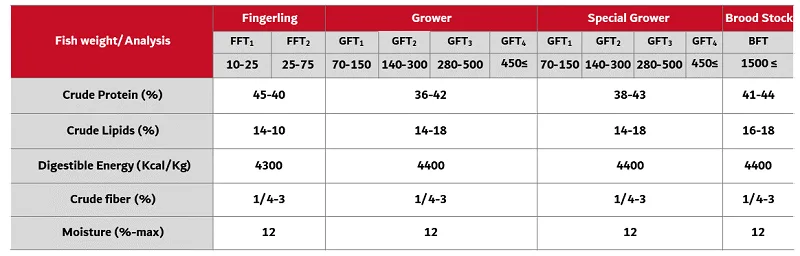
The values in the table should be presented as general ranges and should be adjusted according to fish strain, water temperature, quality of raw materials, farming system, and production objectives.
At all stages, protein quality and digestible protein are more important than the percentage of crude protein. The composition of sources such as fish meal, wheat gluten, and other protein sources must be such that the profiles of essential amino acids, particularly lysine, methionine, and threonine, are balanced. Moreover, the dietary fat must not only provide energy and essential fatty acids EPA and DHA but also be controlled for peroxide value and oxidative stability.
The needs for vitamins, minerals, accessible phosphorus, and functional additives must also be adjusted according to the growth stage. At Sadad Daneh Novin, this adjustment is made considering the analysis of raw materials, extrusion processing conditions, feed size, water stability, and performance indicators of the farm.
Nutritional Requirements of Fry and Young Trout
Protein: Fry require a diet with the highest quality protein (at least 42.6% crude protein); what is important is not only the crude percentage but also digestible protein and the profile of essential amino acids. Lysine and methionine are the main limiting factors for fast muscle tissue growth at this stage.
Fat and Energy: At least 12% fat is recommended to provide enough energy for rapid growth, so protein in the diet is utilized for tissue building rather than metabolism (protein-sparing effect). Provision of EPA and DHA is vital for cellular membrane and nervous system development.
Phosphorus: The requirement for accessible phosphorus is high at this stage, as rapid skeleton development is underway; its deficiency can lead to weak bones, scoliosis (spinal deformity), and stunted growth.
Feed Size: The diameter of the feed should be suitable for the mouth diameter of the fish; for young fry, feed sizes of 0.5 to 2 millimeters with high durability and minimal dust are selected.
Feeding Frequency: Due to the small stomach capacity and high digestive emptying speed, frequent feeding (6 to 8 meals per day) with uniform distribution is essential for uniform flock conditions and maximum growth.
Nutritional Requirements of Growing Trout
As trout transition from fry stage to growth phase (around 5 to 50 grams), the relative growth rate slightly adjusts, and the requirement for crude protein percentage in the diet gradually decreases (minimum 42 percent). At this stage, the key point in industrial formulation is the precise adjustment of the ratio of digestible protein to digestible energy (DP/DE). Sufficient energy derived from quality fats and gelatinized starch prevents the catabolism and burning of valuable amino acids for basal energy needs.
As the fish size increases and the mouth widens, feed size gradually shifts from small to medium sizes (about 2 to 2.5 millimeters); this size adjustment optimizes feeding biomechanics and improves the feed conversion ratio (FCR) by reducing fish energy expenditure chasing and swallowing food.
Grow-out Phase: Efficient Growth and Conversion Management
The grow-out phase is the longest and most sensitive period in terms of managing feed costs and quality control. During this stage, the fish transition from average weights to economic weights.
Optimizing the Protein-to-Energy Ratio (P:E Ratio): In the grow-out phase, the main goal is to maintain daily growth rate (SGR) alongside controlling feed conversion ratio (FCR). Unlike the early stages when protein is at the highest level, in this phase, proper management of energy levels (through quality oils) is aimed at preventing protein wastage for energy supply.
Managing Feed Quality Stability: Given the extended duration of this phase, the physical stability of feeds and resistance to lipid oxidation is vital. The use of strong antioxidants and toxin binders in the formulation ensures the digestive health of the fish during this long period.
Controlling Environmental and Nutritional Parameters: At this stage, the coordination between the oxygen levels in the rearing environment and feeding strategy is the key to preventing stress and enhancing survival rates.
Nutritional Requirements of Harvest-Ready Trout
When the fish approaches the target weight (Market Size), the feeding strategy must shift from “rapid growth” to “preparation for market.” At this stage, our goal is no longer just to grow the fish but to manage the quality characteristics of the flesh.
Managing Final Growth and Preventing Excessive Growth: At this stage, the precise management of growth rate is essential so that the fish does not gain excessive weight, leading to excessive fat accumulation in the muscle tissues.
Controlling Carcass Fat (Lipid Deposition Control): One of the main challenges in trout is managing the amount of fat storage. Care must be taken to ensure that the level of fatty acids in the feed is regulated to keep carcass fat at a standard level while maintaining an optimal fatty acid profile (such as the Omega-3 to Omega-6 ratio) for consumer preferences.
Maintaining Quality and Texture of Flesh (Meat Texture & Quality): The quality of trout flesh is directly influenced by the sources of protein and the amount of fiber and carbohydrates consumed. Balanced nutrition ensures that the fish muscle texture remains firm and not softened, which can occur due to excessive carbohydrate or fat intake.
Attention to Color, Texture, and Taste (Sensory Attributes): The color of trout flesh (that appealing pink/red hue) directly depends on the amount of carotenoids consumed (such as Astaxanthin). Additionally, controlling the level of lipid oxidation (by monitoring TVN and Peroxide Value) ensures that the fish does not have an unpleasant taste and maintains its fresh and balanced flavor.
Adjusting Pre-harvest Feeding Strategy (Pre-harvest Feeding Strategy): In the days leading up to harvest, managing the feeding schedule is very critical. Gradual reduction or precise adjustment of feeding amounts is necessary to ensure complete digestive emptying and to prevent the accumulation of waste materials in the fish’s digestive system, which can disrupt the fish’s appearance and health during transport.
Differences in Trout Feed at Different Growth Stages
Physiological changes and metabolic needs of trout from larval stage to reaching market weight require a strategic change in formulation and physical characteristics of the feed. Using an inappropriate diet at any stage can lead to reduced growth rates or increased production costs.
Suitable Feed for Trout Fry
At the most sensitive stage of life, the main goal is to support the immune system and rapid development of body tissues.
Particle Size and Texture: The use of very fine crumble feed with rapid absorption capability is essential to match the limited capacity of the small digestive system.
Protein Quality and Stability: The protein must have the highest digestibility to minimize nitrogen loss. Furthermore, high water stability is crucial to prevent the formation of suspended particles and contamination of the substrate.
Suitable Feed for Growing Trout
At this stage, the focus is on increasing body mass and optimizing economic returns.
Managing Size and Energy: As the fish weight increases, feed size should gradually increase. During this period, the precise adjustment of the protein-to-energy ratio (P:E Ratio) is prioritized to prevent protein catabolism and carefully control the feed conversion ratio (FCR). Proper oil management in the diet is key to controlling feed intake and balanced growth.
Suitable Feed for Finishing Trout
In the finishing stage, the feeding strategy shifts from “rapid growth” to “managing carcass quality.”
Balancing Growth and Quality: The goal is to achieve maximum weight while controlling the amount of fat deposition in muscle tissues.
Metabolic Health: Given the high consumption of feed, attention to liver health and the use of stable and low-waste feeds to prevent oxidative stress and maintain overall fish health during the long finishing period is essential.
Extruded Trout Feed: Innovation in Aquaculture Nutrition
Extruded feed has revolutionized the aquaculture feed production industry, especially for sensitive species like rainbow trout. This complex production process, which involves combining heat, pressure, and moisture, not only enhances the nutritional properties of raw materials but also optimizes the physical characteristics of the feed.
Extruded Trout Feed Production Process
The production of extruded feed is a multi-step and precise process where each step directly impacts the final product’s quality:
Grinding and Homogenizing Raw Materials: Raw materials (protein, carbohydrate, fats, vitamins, and minerals) are ground to specific sizes to increase their surface area and allow for more uniform mixing.
Precise Mixing (Mixing): Ground raw materials are mixed in precise formulation ratios to ensure uniform distribution of nutrients throughout the feed batch. This step is vital for maintaining the homogeneity of the final product.
Preheating and Moisture Increase: The mixture is placed in a device called a pre-conditioner and is heated with hot steam and moisture. This initiates the gelatinization process of starches and softens the materials.
Extrusion (Extrusion): The preheated mixture is fed into the extruder. Under high pressure and temperature created in the extruder barrel, starch is fully gelatinized, proteins are denatured, and the raw materials are blended into a cohesive structure. Passing through a die with a specific shape and size extrudes the feed.
Cutter and Shaping: The output feeds from the extruder are cut into desired sizes by rotating blades.
Drying (Drying): The wet feed is passed through a dryer to reduce its moisture to standard levels (usually below 10-12%). This step is essential for increasing shelf life and preventing microbial growth.
Coating (Coating/Fat Addition): After partial cooling, oils and flavor enhancers are sprayed on the surface of the pellets. This step increases the energy content of the feed and enhances its attractiveness to aquatic organisms.
Final Cooling and Packaging: The final feed is completely cooled and then packaged in appropriate materials to preserve quality and prevent moisture absorption.
Benefits of Extruded Trout Feed:
Increased Digestibility: The extrusion process, by gelatinizing starches and denaturing proteins, facilitates the digestibility of nutrients for aquatic organisms.
Improved Water Stability: Extruded pellets have a compact structure resistant to breakdown in water, which reduces feed wastage and environmental pollution.
Increased Energy Level: The ability to add higher amounts of fats (oils) during the coating phase raises the energy level of the feed and better meets the needs of growing fish.
Neutralization of Anti-nutritional Factors: High heat and pressure can deactivate some anti-nutritional factors present in plant feed sources.
Reduction of Microbial Load: The high-heat production process helps reduce the microbial load in the feed.
Benefits of Extruded Feed for Trout
The extrusion process, by creating targeted physical and chemical changes in raw materials, brings numerous benefits to trout feed that directly impact farming efficiency and fish health:
Controlled buoyancy or sinking: By adjusting extruder parameters (such as temperature, pressure, and humidity) as well as the amounts of fat and carbohydrates, feed can be produced to either float (for surface-feeding species) or sink at a defined and controlled rate (which is critical for trout) in the water column. This facilitates feeding at various water levels and for fish with different feeding patterns.
Increased digestibility of starch: High temperature and pressure during the extrusion process causes full gelatinization of starch. This process breaks down the crystalline structure of starch and transforms it into a form that fish digestive enzymes (amylases) can easily break down and absorb. As a result, the carbohydrate energy source is utilized more effectively.
Reduced feed wastage: Extruded feeds, due to their more compact and stable structure, are less likely to break down and produce fewer fine particles (fines). This feature, along with controlled sinking capability, minimizes the wastage of feed that settles at the bottom of the pond or is lost from the fish’s reach.
Improved water stability: The cohesive and gelatinized structure of extruded feed shows high resistance to decomposition and dissolution in water. This long-lasting stability provides sufficient time for the fish to consume the feed and prevents nutrient waste into the water.
Ability to adjust feed density: By changing process parameters, the density of the feeds can be adjusted. This is particularly important for feeding in aquaculture systems with high density or in varying water currents.
Precise control over feed size: The extrusion process allows for the production of feeds with uniform sizes that meet the mouth and digestive tract needs of fish at every growth stage.
Reduction of water pollution: Due to less feed waste and better water stability, the amount of undissolved or decomposed organic matter in the water column is reduced, thereby improving aquaculture water quality (such as reducing BOD and COD loads).
Comparison of Pelleted and Extruded Feed: Which is More Suitable for You?
Choosing between pelleted and extruded feed goes beyond simply picking between two types of products; it is a strategic decision in cost management and quality production. While both types of feed are used in the industry, there are fundamental differences in the production process, physical characteristics, and their impact on the farming environment.
Table 2 Comparison of Pelleted and Extruded Feed
| Comparison Criterion | Pelleted Feed (Pelleted) | Extruded Feed (Extruded) |
| Digestibility | Average (depends on raw material quality) | Very high (due to starch gelatinization) |
| Water Stability | Average (risk of faster decomposition in water) | Very high (coherent and resistant structure) |
| Dust and Fines Generation | Higher (risk of producing fine particles or fines) | Very low (uniform pellets and dust-free) |
| Buoyancy Control | Limited (usually sinks or is heavy) | Totally controllable (float or sink) |
| Production Energy Consumption | Lower | Higher |
| Cost Price | Cheaper | More expensive |
Specialized Analysis: Intelligent Choice Based on Farming Needs
To make the right decision, one should look beyond the “purchase price” and consider the “cost of producing each kilogram of meat.”:
From a biological perspective: In extruded feed, due to the pressure and heat process, nutrients are altered to a form that trout can absorb much more easily. This means a lower feed conversion ratio (FCR) and faster growth. In contrast, in pelleted feed, some of the energy may be spent digesting non-gelatinized materials.
From an environmental management perspective: If you are farming in high-density systems or open systems, extruded feed, due to its high stability in water and lack of dust generation, prevents substrate pollution and oxygen depletion. In pelleted feed, the risk of fine particle loss and their conversion into organic matter at the bottom of the pond is higher.
From a nutrition management perspective: Only in extruded feed can you manage the “sinking time” by precisely adjusting production parameters. This means you can know exactly how long the feed remains in the water for the fish to have enough time to consume it.