
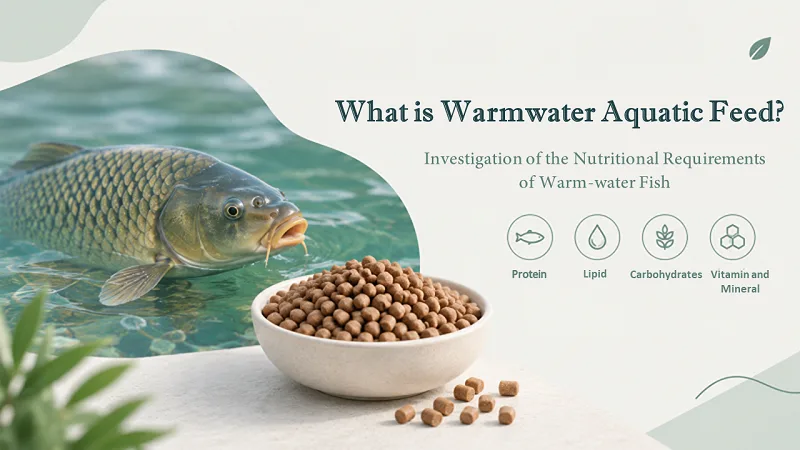
Introduction; Why is Choosing the Right Feed the Heart of Profitability in Warmwater Farms?
In the modern aquaculture industry, the farming of warmwater fish accounts for a significant portion of aquatic protein production in the country. However, achieving maximum growth potential and economic profitability in fish farming ponds is directly linked to nutrition management; as over 60 to 70 percent of the total operating costs of an aquaculture farm constitute the cost of feed supply. Therefore, any error in selecting the formulation or the physical quality of the feed directly results in wasted capital, increased feed conversion ratio (FCR), and reduced profit margins for farmers.
From a scientific perspective, the nutrition of warmwater fish (such as common carp) fundamentally differs from cold-water carnivorous fish like trout. Warmwater fish have different digestive anatomies; the presence of long intestines, the absence of a true acidic stomach in some species, and high secretion of carbohydrate-digesting enzymes (such as amylase) make them suited to utilizing plant sources and processed carbohydrates. Moreover, the metabolism and appetite of these fish are highly dependent on water temperature changes; a factor that emphasizes the importance of designing rations suitable for different seasons.
The aim of this specialized guide on the Novin Sedadaneh Company website is to decode the link between “the digestive physiology of warmwater fish” and “modern extrusion feed production technology.” Below, we embark on a scientific journey from a thorough examination of the biochemical needs of these aquatic organisms to the selection of engineered industrial feed, enabling you to achieve optimal weight gain of fish stock during the production cycle with minimal costs and maximum efficiency.
Main Species of Warmwater Fish and Their Dietary Habits
The term “warmwater fish” refers to a range of aquatic animals whose optimal temperature range for growth and metabolic activity is between 25 to 30 degrees Celsius. One of the farming patterns of these fish in the country is the polyculture system, which is based on utilizing different ecological layers of the pond and fully exploiting ecological niches. In this system, it is typically recommended to release 35 percent common carp, 15 percent grass carp, 40 percent silver carp, and 10 percent bighead carp into the pond. To achieve maximum yield in the stock, a precise understanding of the feeding habits and behaviors of each of these species is the primary prerequisite for effective feeding management:
Introduction of Common Carp (Common Carp); A Bottom-Feeding Omnivore with High Carbohydrate Needs
The common carp (Cyprinus Carpio) is the flagship species of earthen ponds. Generally, the common carp is omnivorous and feeds on bottom-dwelling animals, chironomids, and larger planktonic organisms. From the perspective of industrial ration formulation, common carp exhibits a very high adaptability to gelatinized carbohydrate sources, and the main objective of distributing energy-rich feeds in the farm is to maximize energy intake.
Grass Carp or Amur Fish:
This species primarily feeds on higher plants and macrophytes and is raised in farming ponds with clover and alfalfa. This fish requires 25 to 30 kilograms of green forage to produce one kilogram of meat. It is also equipped with powerful, two-row pharyngeal teeth to shred fibrous plant tissues. Since this fish lacks endogenous cellulase, fiber digestion and cell wall breakdown depend on gut microorganisms and the rapid passage of food. Along with green forage, providing a balanced supplemental feed with appropriate protein levels can significantly enhance the growth efficiency of Amur.
Note: To expedite the growth of these two species (Amur and common carp), the farmer is compelled to use supplementary feeding. In this regard, green forage (clover and alfalfa) is utilized for feeding Amur, while feeding common carp can include a mixture of handmade feed consisting of grains, meals, and fish powder in paste form or using concentrated feed. For common carp, it should be at a level where 60-70 percent of the fish’s product is derived from natural pond feed, while the remainder comes from supplementary feed.
Silver carp or phytophagus (Hypophthalmichthys molitrix): A filter feeder of phytoplankton, it captures microalgae through its interdigitated and compressed gill rakers.
Bighead carp (Aristichthys nobilis): Primarily feeds on larger zooplankton and suspended detritus. Although the nutritional basis for these two species depends on pond fertilization, in highly intensive systems, the consumption of micron-sized particles and suspended industrial extruded feed has also been reported.
Note: The production of both species (silver carp and bighead) in farm ponds does not require supplementary feeding and can be produced at minimal costs through fertilization and pond enrichment.
Digestive Physiology of Warmwater Fish; Anatomical and Enzymatic Differences
A precise understanding of the biochemistry and anatomy of the digestive system of warmwater fish is the golden key to formulating economical and high-efficiency rations. Unlike cold-water carnivorous fish such as trout, which have a muscular stomach secreting hydrochloric acid (HCl) and the enzyme pepsin, warmwater fish have developed a completely different digestive and metabolic pattern throughout their evolution.
Comparison of the Agastric Digestive System in Carp with Cold-Water Carnivorous Fish
Carp species are agastric, meaning they lack a true stomach that would provide a strong acidic environment with very low pH for the initial denaturation of proteins and pepsin digestion at the beginning of their digestive tract. Instead, the esophagus connects directly to an expanded section of the intestine known as the “intestinal bulb,” which serves as a temporary storage space for ingested food but has no digestive function. Histological examination of the spiral intestine reveals that its mucosa lacks the ability to secrete acids and digestive enzymes. Additionally, the ratio of intestine length to total body length (Relative Gut Length – RGL) in carp is significantly higher than in carnivorous fish (sometimes more than three times the body length). This long intestine increases the retention time of food in a neutral to slightly alkaline environment and provides a broad contact surface for digestion and absorption by intestinal and pancreatic enzymes.
High Amylase Activity and Amazing Capacity for Utilizing Gelatinized Carbohydrates
Unlike cold-water fish that have limited ability to digest raw starch, carp have an extraordinary catalytic potential in secreting carbohydrate-digesting enzymes, particularly alpha-amylase from the hepatopancreatic tissue. This biological feature allows nutrition specialists to use a higher percentage of starchy materials and grains in the diet. However, a critical condition to achieve maximum digestibility coefficient is the complete gelatinization of starch bonds during the extrusion cooking process. Gelatinized starch not only provides rapidly available energy for the fish but also activates the protein-sparing effect, preventing the burning of expensive amino acids for energy.
The Effect of Water Temperature on Food Passage Rate and the Catalytic Activity of Intestinal Enzymes
As ectothermic creatures, the digestive efficiency of warmwater fish is linearly dependent on the ambient water temperature:
At optimal temperatures (22 to 26 degrees Celsius): The kinetics and catalytic activity of trypsin, chymotrypsin, and amylase peak. The rate of food passage through the digestive tract (Transit Time) is balanced, and nutrient absorption efficiency maximizes.
In late summer and late autumn with cooling water, the activity of endogenous enzymes drops sharply, the food passage rate slows significantly, and digestive secretions decline. Consequently, the fish enter a state of dormancy until the spring of the following year.
Protein and Essential Amino Acid Profile (EAA)
Protein is the most expensive and essential component in the diet of cultured fish, providing the building blocks for muscle growth.
1. Protein Needs at Different Stages of Growth
The requirement for crude protein (Crude Protein – CP) in warmwater fish is not fixed and is directly proportional to age, physiological weight, and the rate of protein synthesis in tissues:
Learner and Early Stage (Fingerling / Fry): At initial weights (below 5 grams), due to the very high specific growth rate (SGR) and development of vital organs, the requirement for crude protein is set at a minimum of 44 percent.
Growth and Finishing Stage (Grower & Finisher): As age and biomass weight increase, the growth gradient declines linearly and the fish’s biochemical requirement for protein adjusts to 41 to 30 percent. At this stage, excessive protein increase not only does not speed up growth, but also due to excess nitrogen excretion through the gills, leads to a decline in water quality and an increase in ammonia load in the pond.
2. Limiting Amino Acids and Protein to Energy Balance (P:E Ratio)
The fish does not require protein per se but needs a balanced profile of essential amino acids (Essential Amino Acids). Carp do not have the ability to synthesize 10 essential amino acids (including arginine, histidine, isoleucine, leucine, lysine, methionine, phenylalanine, threonine, tryptophan, and valine).
- Lysine and Methionine: In plant-based diets that have high shares of oilseed meals (soybean, cottonseed, canola), lysine and methionine are the main limiting amino acids. Lysine deficiency leads to muscle wasting and decreased meat yield, while methionine deficiency results in reduced appetite and accumulation of fat in the liver.
- Protein to Digestible Energy Ratio (P:ERatio): Maintaining a balance between the amount of protein and digestible energy (g/MJ) ensures that amino acids are not burned for the production of ATP and energy, but are instead channeled directly into the synthesis of actin and myosin filaments. The optimal ratio for common carp is typically adjusted in the range of 9/18 to 4/26 protein per megajoule of energy.
Energy and Carbohydrate Metabolism
Unlike cold-water fish that have limited capability to utilize sugars, carbohydrates serve as an economical and vital energy source in the diets of warmwater fish.
Optimal Use of Gelatinized Starch and the Protein-Sparing Effect
Available data show that the maximum utilization rate of various carbohydrate sources in feed for different fish species varies from 12 to 48 percent.
- Importance of Gelatinization: Raw starch with tight crystalline bonds is inaccessible to digestive enzymes. In the extrusion process, the combination of temperature, moisture, and mechanical shear breaks the amylose and amylopectin bonds, resulting in more than 80 to 90 percent of the starch gelatinization.
- Protein-Sparing Effect: By supplying a significant portion of the energy required for basal metabolic rate through glucose derived from hydrolyzed starch, gluconeogenesis pathways from amino acids are inhibited. This phenomenon allows the feed to achieve the highest protein efficiency ratio (PER) and the lowest feed conversion ratio (FCR).
Fats and Essential Fatty Acids (EFA)
Fats are the densest metabolizable energy source (9 kilocalories per gram) and the main carriers of fat-soluble vitamins and steroids.
Need for Unsaturated Fatty Acids of Omega 3 and 6 in Warm Climates
- Warmwater fish have a significant difference from free-swimming fish in their demand for polyunsaturated fatty acids (PUFA):
- Omega Three and Six Balance: In warm climates, carp require a balanced supply of both families of omega-3 and omega-6 fatty acids (about 1% of the total diet for each). An imbalance of fats or the use of oxidized fats (high peroxides) can cause liver damage, hepatic steatosis syndrome, and a decline in cellular membrane stability. The optimal level of crude fat in carp feed is considered to be between 6 to 10 percent.
Vitamins and Minerals (Premixes)
Although micronutrients constitute a very small weight fraction of the feed, they are catalysts of all biochemical processes and components of the fish immune system.
1. Stable Vitamin C and Vitamin E; The Oxidative Defense Barrier
- Stable Ascorbic Acid: Pure vitamin C is heat and oxidation unstable during extrusion. Stable use prevents thermal degradation. This vitamin acts as a coenzyme in collagen tissue synthesis, preventing the disease of skin bleeding, accelerating wound healing, and enhancing phagocytic system activity.
- Vitamin E (alpha-Tocopherol): The main antioxidant in the lipid phase of membranes that prevents the peroxidation of phospholipids under stress conditions caused by high ambient water temperatures in midsummer.
2. Available Phosphorus and Mineral Balance; Preventing Skeletal Deformities
- Available Phosphorus: The phosphorus in plant materials is primarily in the form of phytate (Phytic Acid), which is undigestible for carp due to the lack of gastric phytase enzyme production. A deficiency of available phosphorus leads to spinal abnormalities such as lordosis and scoliosis, decreased bone mineralization, and scale loss. The formulation of feed with highly digestible mineral phosphorus sources (such as monocalcium phosphate MCP) completely eradicates these disorders.
- Chelated Trace Elements: The consumption of organic and chelated forms of zinc (Zn), manganese (Mn), and selenium (Se) has higher bioavailability than traditional sulfate salts and keeps the antioxidant enzyme system (such as superoxide dismutase and glutathione peroxidase) activated.
Nutrition Requirement Guideline Table for Carp Based on Weight and Growth Stage
Adjusting the dynamics of feed formulation based on biomass, age, and mouth gap diameter of the fish is crucial to prevent capital loss and mortality. The table below presents a standard guide of the physical and biochemical specifications of carp feed throughout the rearing period:

Practical Analysis of the Data in the Table for Farmers
As indicated in the above matrix, two fundamental trends are observed as one progresses from early stages to final finishing:
- Decrease in Protein Demand Gradient: The biochemical requirement of the fish drops from about 44% to 36%; feeding finishing fish with feed containing excess protein imposes heavy costs on the farm and produces nitrogen-rich waste, causing pond suffocation due to uncontrolled algal bloom.
- Physical Adaptation to Mouth Diameter: The choice of feed size should be precisely about one-third to half the width of the fish’s mouth; feed that is too small causes prolonged buoyancy and energy expenditure for feeding, while feed that is too large leads to rejections or blockage in the digestive tract.
Hand Feeding, Compressed Pellets, or Extruded Feed; Which One is the Winner?
In today’s aquaculture world, feed manufacturing technology is not just a “industrial production”; rather it is an exact engineering that determines what percentage of nutrients is converted to fish muscle and what percentage turns into sludge at the bottom of the pond. The difference between choosing traditional methods and advanced extruded feeds is the difference between “simple survival” and “sustainable profitability”.
Disadvantages of Raw and Powdered Feeds (Wasting Capital in Water)
Although the use of powdered or hand feeds may seem attractive initially due to lower purchasing costs, in reality, it is an “economic trap.” The main drawbacks of this method are as follows:
- Severe Decline in Water Quality: Due to the lack of physical cohesion, a large portion of the feed dissolves and disperses in the water before being consumed by the fish. This results in increased organic load, elevated ammonia and nitrite levels, and ultimately reduced dissolved oxygen.
- Nutrient Wastage: Water-soluble vitamins and minerals are quickly washed out from the powdered particles and become unavailable to the fish.
- Very High Feed Conversion Ratio (FCR): In traditional systems, FCR often exceeds 3.5. In simple terms, you spend 3.5 kilograms to gain only 1 kilogram; meanwhile, a large portion of this feed is used to provide energy for the fish’s respiration or is unnecessarily fertilizing the pond.
Advantages of Extrusion Technology; More Than Just a Simple Change
Extrusion is a process that produces feed with high physiological standards through the combination of high pressure, heat, and mechanical shear:
- Maximum Gelatinization of Starch: This process breaks down the crystalline structure of starch and converts it into gelatinous form. This significantly facilitates carbohydrate digestion for carp and increases the net energy available.
- Destruction of Anti-Nutritional Factors (ANFs): Many plant raw materials (such as soy) contain anti-nutritional factors like trypsin inhibitors and tannins. The temperature and pressure in the extruder largely deactivate these factors and significantly enhance protein digestibility.
- Controlled Floatability: Smart feeding management is only possible with floating feed. The farmer can observe the fish’s appetite and stop feeding as soon as the stock is satiated; an advantage that is impossible with sinking feed.
Comparison of Water Stability Index (PDI)
One of the main quality control indicators at Novin Sedadaneh is the PDI or Pellet Durability Index.
- Water Stability: High-quality extruded feed should maintain a balance between “durability” and “digestibility.” The feed should not disintegrate immediately upon entering the water (which would cause pollution), and it should not be so hard that its digestion becomes difficult for the fish.
- Importance of PDI (Pellet Durability Index): PDI is a measure of how much the feed can withstand the impacts of transport and bag discharge. Feeds with low PDI turn into “dust.” This dust not only goes uneaten by the fish but also causes filter clogging and water pollution. The extrusion technology creates a dense and uniform texture, maximizing PDI and ensuring that 100% of what you purchase is consumed by the fish.
Feeding Protocols for Warmwater Fish in Changing Environmental Conditions
Even with the most advanced extrusion feed formulations, not adhering to behavioral principles and feeding environmental protocols can significantly reduce production efficiency. As warmwater fish are ectothermic and their metabolic dynamics fluctuate directly with physicochemical conditions of the water, implementing a flexible and seasonal feeding strategy is an unavoidable necessity.
Adjusting Feeding Rate Based on Seasonal Changes and Water Temperature
The daily feeding rate should always be based on a percentage of the live biomass in the pond and adjusted carefully according to the thermometer:
- Temperatures below 15 degrees Celsius (Cold season/Winter dormancy): Intestinal enzyme secretion is minimized and the digestive system is semi-active. Feeding should be limited to 1 to 2 times a week during the warmest hours of the day, with very low amounts (under 0.5 percent of biomass) solely to maintain the microbial flora of the intestine and stability of the immune system.
- Temperatures between 15 to 22 degrees Celsius (Spring and early Autumn): Metabolism enters an active phase. The feeding rate is set at between 1.5 to 2 percent of body weight, and feeding occurs in 2 batches.
- Temperatures between 22 to 28 degrees Celsius (Golden growth window): Peak secretion of amylase and proteases. The feeding rate can increase up to 3 to 4 percent of biomass depending on fish weight, and feed is distributed in 3 to 4 meals at regular intervals.
- Temperatures above 30 to 32 degrees Celsius (Summer peak): Due to the decline in gas solubility in warm water and thermal stress, the basal metabolic rate rises while digestive capacity declines; under these conditions, the feeding rate should be reduced immediately by 20 to 30 percent to prevent losses due to digestive suffocation.
The Correlation of Water Quality (Dissolved Oxygen DO and Ammonia) with Feeding Hours
Digestion and absorption of food is an oxygen-intensive process. Therefore:
- Feeding should never occur before sunrise when the concentration of dissolved oxygen (DO) is at its lowest due to the nighttime respiration of phytoplankton.
- The best time to start morning feeding is at least 2 to 3 hours after sunrise; at this time, photosynthesis has begun, and the oxygen level has risen above 4 to 5 milligrams per liter.
- On cloudy, rainy days, or during sudden drops in atmospheric pressure, the volume of feed provided should be immediately reduced; as the buildup of undigested protein along with the drop in oxygen can quickly push the ammonium level to critical and toxic thresholds.
Feeding Techniques in Polyculture Management
In dual-purpose breeding ponds, common carp are the primary target for extruded feed. However, the aggressive behavior of grass carp can limit the access of carp to feed:
- Proactive Feeding Strategy for Grass Carp: Fresh green fodder (clover, alfalfa, or reeds) is first distributed within specialized floating frames for grass carp to temper the initial appetite of these voracious fish.
- Wide Distribution of Extruded Feed: Once grass carp are engaged, floating extruded pellets are spread in the central and designated areas of the pond. This allows common carp to feed on the high-energy feed without competitive stress and simultaneously fertilizes phytophagous and bighead carp with small particles resulting from food consumption, plankton, and zoobenthos.
Economic Analysis; How Engineered Feed Reduces Production Costs?
In the competitive aquaculture economy, the difference between a loss-making farm and a profitable production unit hinges on a golden indicator known as Food Conversion Ratio or FCR (Food Conversion Ratio). In warmwater fish farms, feed constitutes more than 65 to 70 percent of operational costs; thus, even the smallest optimization in this area will have a multiplying effect on the farm’s net profit.
Formula for Calculating FCR and Profitability Analysis in Hectare-Scale Ponds
The Food Conversion Ratio is obtained by dividing the total weight of feed consumed by the total weight gain of the fish:
In traditional systems using hand-fed or low-quality flour feeds, FCR usually indicates a number in the range of 2/3 to 4. This means that over 5/3 kilograms of feed are wasted to produce 1 kilogram of carp meat. Utilizing extruded feeds, which help maintain feed stability in water, can improve the Food Conversion Ratio.
- Analysis on a Hectare Scale: In a carp breeding pond with standard density, a reduction in FCR by just 0.5 units can result in savings of thousands of kilograms of feed throughout a culture cycle, directly reducing production costs by 15 to 25 percent.
Reduction of Mortality, Uniformity of Harvest, and Improvement of Carcass Quality for Market Acceptance
Improving feed quality is not solely about weight gain; it also has direct economic consequences:
- Reduction of Mortality and Enhancement of Safety Ratio: The presence of complete nutrients and stable Vitamin C in the pelleted formula strengthens the immune system of fish (especially against thermal stresses and parasitic diseases) and minimizes losses.
- Uniformity of Size in the Stock: In traditional feeds, stronger fish swallow the food due to quick sinking and unequal distribution, while weaker fish lag behind. Extruded floating feeds with uniform distribution provide equal access and significantly increase harvest uniformity; an advantage that elevates the selling price per kilogram of fish due to size consistency when marketed to wholesalers.
- Carcass Quality and Market Appeal of Fillet: The precise balance of energy to protein ratio and the use of high-quality fat sources prevent the accumulation of visceral fats, creating a dense, well-colored texture with a higher fillet percentage, which is a unique competitive advantage for processing industries and export markets.
Reliable Feed Selection for Warmwater Fish
In today’s competitive market, the success of an aquaculture unit depends on partners who provide engineered solutions beyond mere product sales. High-quality feed, backed by the latest technical knowledge, a deep understanding of climatic conditions, and aquaculture farms in Iran, alongside the expertise of the D&R team in feed formulation, has established new standards in the warmwater fish feed production industry.
Specialized Formulation Based on the Digestive Physiology of Farmed Fish in Iran
Unlike generic and imported formulas that may not align with climate conditions and water resources in the country’s farms, suitable rations are designed based on the physiological structure and actual needs of carp species in various climates. In these formulations, a precise balance between essential amino acid profiles, stable energy, and optimal protein-to-energy ratios are maintained to achieve the highest conversion rates to meat and minimal waste.
Advanced Extrusion Technology and Precision Engineering of Pellet Physical Properties
Modern and advanced extrusion production lines allow for precise control of the physical parameters of feed, including:
- Controlled Buoyancy and Durability: Floating feeds with high stability percentages in water allow farmers to manage flock appetite accurately and prevent feed wastage.
- Precise Dusting: Advanced winnowing and sifting processes ensure that the final product is free from flour dust and fine particles; an advantage that prevents filter clogging and clouding of pond water.
Strict Quality Control of Raw Materials (Advanced Laboratory and NIRS System)
The quality of the final feed is directly dependent on the health and purity of the raw materials. In the quality control (QC) unit:
- All shipments of protein and grains are assessed by analysis systems and rigorous laboratory testing before entering the production line.
- Continuous and rigorous monitoring ensures the absence of mycotoxins, molds, and anti-nutritional factors to guarantee the health of the digestive system and immune system of fish throughout the entire culture period.
Frequently Asked Questions by Warmwater Fish Farmers (FAQ)
This section addresses your key concerns on the path to achieving a successful production cycle:
1. Why do carp species respond better to floating extruded feed?
Extruded feeds have a much higher digestibility due to the cooking process under pressure and heat. More importantly, the buoyancy of the feed allows the farmer to directly observe the feeding behavior of the fish and prevent feed wastage and water pollution by precisely controlling the feeding volume.
2. What is the best feeding time during the day for warmwater fish?
The best time is during the warmer hours of the day (2 to 3 hours after sunrise until before sunset). It is strongly recommended to avoid feeding during the early morning hours or when the weather is cloudy, as the concentration of dissolved oxygen (DO) is low, to prevent oxygen stress and potential losses.
3. Does a higher protein percentage always mean better growth in carp?
No; fish growth is the result of a “balance” in the diet, not just protein. Excess protein, if not balanced with sufficient energy (carbohydrate/fat), is oxidized by the fish and converted to ammonia, which is toxic. The precise formulation of modern pelleted feed is based on “digestible protein” and optimized energy-to-protein ratios.
4. What causes rapid disintegration of pellets in pond water?
This issue is usually due to low quality of “gelatinization of starch” in the production process or the use of inferior raw materials. High-quality feeds maintain adequate physical stability due to high extrusion standards and provide sufficient time for fish consumption.
Summary and Next Steps to Increase Your Farm’s Productivity
Nutrition management in modern aquaculture is no longer a subjective or traditional decision; it is a precise science that delineates the difference between significant profitability and farm bankruptcy. As we have examined, transitioning from traditional and flour-based feeds to specialized extruded feeds for warmwater fish, thanks to improved Food Conversion Ratio (FCR), enhancement of digestive system health, and maintenance of water quality, is the key to achieving sustainable and economical production.
What is your next step?
If you are looking to reduce costs, increase uniformity of harvest, and enhance the profitability of your warmwater fish farm, it is time to entrust your flock’s feed formulation to specialists.
The research and development (D&R) team and technical experts at “Sedad Daneh Novin” are with you at every step, from water analysis and biomass calculations to custom feed formulations.
📞 Contact the sales and consulting experts at Sedad Daneh Novin today to receive specialized feed formulation guidance and benefit from special conditions for order registration and direct feed delivery to your farm. Let’s ensure the future of your farm with the cutting-edge extrusion technology!